Posted onSeptember 24, 2015|Comments Off on Transition and family shaking
Hi!
I’ve often talked about life in transition as a time of stretching, surprises, and wondering what is next. During my transition lately, I’ve taken my mother to Iris Virginia to hear David Hogan (a missionary to some dangerous areas of Mexico), and returned to Canada to see my whole family shaken. We’ve had an unexpected death, a miracle birth, and illnesses with family members in the hospital. I’m also part of three churches – two of them in transition. One is a church plant, the other, a church that had a building but has to go mobile since the building will be torn down to make room for a new Costco. We’re all hopeful for what is next, no matter what.
While I was praying about this season, I had a picture of my husband and I being strengthened in what looked like an eye of a hurricane. All around us things and people were being shaken – including our families. And this is indeed what has been happening in our lives. We are being strengthened in the storm and will do more than just persevere.
At the moment, I’m working through helping care for ailing parents, so I don’t have a Ways to Grow in God post for this month. However, I can encourage us all to persevere in the calling that God has given you. Sometimes it doesn’t seem “nice” or exciting, but believe me, it is needed. Just remember Galatians 6:9: “Let us not become weary in doing good, for at the proper time we will reap a harvest if we do not give up.”
A time is coming when every Christian will have to be onboard to serve… Revival is coming! It may be messy, but what matters is how God’s love will touch lives… including ours. Are we willing to work for God (especially God’s way)? Stand in his strength and love.
Posted onAugust 31, 2015|Comments Off on Growing in Transition: Learning our Identity and Purpose
Last time we grew as we discovered the strange connection between suffering and joy; this link shows a very deep trust in God. This foundational trust is the very same part of faith that carried the Apostle Paul when he was imprisoned for the Gospel. It is also the same strange joy that continues to carry and fill the lives of missionaries like Rolland and Heidi Baker. This vulnerable depth of faith also emits a beautiful fragrance of Jesus. I sensed this “godly perfume” in the lives of the persecuted Christians that I met in Shantinagar, Pakistan and in Belfast, Northern Ireland. When we are also willing to count the cost of our faith, and push through in very difficult circumstances, we also become much more refined in our character. We begin to look, sound and even smell like the resurrected Jesus! It’s his presence in us!
There is another kind of season that can be difficult for people – that of transition. Desert or wilderness life experiences are one form of transition, but these are often gradual change. (Link to desert article) But sometimes circumstances happen quickly – you can be accelerated into the next season of your life before you have a chance to catch up, so you learn to re-orient yourself. Other times, you may be stuck in a season of hiddenness that seems to go on and on, only because you can’t see the end of what you are going through. Yet in the midst of this change, there are these constants: the faithfulness and love of God, and that you are deeply loved. We are not orphans. We are not rejected. This is a time to seek God even more. He is calling us to our identity as beloved children of God. We don’t have to work for our inheritance. It is already ours.
I used to be a performance-driven people pleaser. I got to be very good at gauging people’s moods and anticipating their needs. But deep down inside there was a deep insecurity. I needed love and had a huge love deficit. I gave love, but somehow I expected to earn showers of love towards me. Even my own love had conditions on it – I wanted those I cared about to feel the same about me. Yet the love of God is unconditional. We don’t have to earn it. I remember a pivotal time in my life happened quietly in a small mobile church in Thornhill, Ontario. Our pastor handed out small business cards and told us, “here is the highest calling you will ever have.” What did it say on the card? It simply said, “Child of God.” I remember holding this card in my hands. My mind said, “What is this? It’s too simple. That’s not enough. Who am I really? I’m this, and this, and this…” But I didn’t have that foundation of love in my heart that showed how secure I was as a daughter, as God’s child. My heart ached and I cried and cried. I don’t remember receiving ministry, but I must have. I needed to grow in my identity as a child of God.
Deepest Needs: Significance and Security
Larry Crabb is a Christian counsellor and pastor. He was one of the writers we read in my Tyndale Seminary counselling courses in the late 1990’s. I remember he talked about the two deepest human needs: that of significance and of security. At that time in my life, I had a security deficit. I tried to fill it with accomplishments I was achieving on the significance side of life. After I married my husband Tony, he became a significant part of healing my security deficit; although it was really God who completely filled that huge sinkhole. God healed me directly by continually filling me with his love and through the love of my husband and friends.
After my insecurity issues were dealt with, I went through a difficult season when I discovered I also had a significance deficit. When I was in school, I filled that need with my academic pursuits, even though these were not enough. Also when I married, I was sidelined away from a ministry career for a time, so the deficit became even more obvious. I felt like I was stuck in the desert with no way out of it. God began to refine that area of my life. In time, I came to lean less on fulfilling tasks as a way to receive significance. Again, my deepest significance is ALSO fulfilled in actively being a child of God. Degrees, mission trips, radio shows and lay ministry experience are all wonderful things, but these roles don’t replace who you are in Christ. You are, as a son, or as a daughter – secure in his love for you. You are not a slave that works for a master. You are a child who inherits. As an inheritor, you also have a role to represent the Father. That is your purpose. Jesus, through the Holy Spirit, fills you to do whatever you are to do for him. When you learn to surrender and fully trust his leading in your life, your significance is confirmed over and over as he works through you. Your highest significance is as God’s child; and each child has a unique ministry. Proverbs teaches us to “trust in the Lord with all your heart, and do not lean on your own understanding. In all your ways, acknowledge him, and he will make your paths straight” (Proverbs 3:5-6).
While you spend time acknowledging God, he gives you your assignment and all necessary grace to accomplish it. He provides the path that is unique for each of us. He prepares us in advance for whatever work we are called to do. He utilizes all of our skills, talents and gifts to work together in a perfect blend. He makes us “uniquely us,” and he gives us the power and love to jump deeply into more of who we were meant to be. Ephesians 2:10 reminds us that “we are God’s handiwork, created in Christ Jesus to do good works, which God prepared in advance for us to do.” Sometimes these works look different in each season, depending on the assignment that God will give us. When we do these works, they bring deep satisfaction: whether they are monetized as part of our careers, whether they are part of our natural helping roles, or whether they are a supernatural ministry gift (see 1 Corinthians 12).
What is God asking you to be? Unless you know who you really are, you’ll never reach your full potential. You are called to fullness and success, but it is the Father who imparts your identity and purpose. Just as it took you time to grow up physically from babyhood to adulthood, so it often takes time to grow up spiritually. And in this process and season of “there but not yet,” it really is all about trust. As you trust God, he will give you tasks to do, and many wonderful surprises along the way. Open your eyes and look for them. He will not disappoint. Take time with him and let him love you. Allow him access into the secret areas of your heart and give him all your plans. He will reshape all of your life in a way that is infinitely beautiful.
When I was on my first mission trip in Northern Ireland, I discovered the music of Robin Mark. His song “All for Jesus” was instrumental in the complete surrender that opened up healing of my insecurity. Sure, I entered into a desert season for a while, but it was necessary to deepen my trust. The same happened when I surrendered in the all the areas of significance and ministry. It brought me to another desert, and again, it was essential to take out thorns in my heart. Again, it was necessary to deepen my trust in another way. I am not the same person I was when I first journeyed to Northern Ireland in 1995. For this I am very thankful. Both of these needs are summed up in Robin’s song “All for Jesus“, as well as the Bethel Music song “Good Shepherd.”
Next time, we will continue our journey and learn how to deepen our identity in seasons of silence and God saying “no.” As we walk, we’ll sing Amanda Cook’s lyrics (from Good Shepherd). “In the process, in the waiting, you’re making melodies over me. And your presence is the promise; for I am a pilgrim on a journey…”
Blessings,
Laurie-Ann Copple
Comments Off on Growing in Transition: Learning our Identity and Purpose
Posted onJuly 31, 2015|Comments Off on Book excerpt: from L-A’s book
Hi! It’s been a very busy summer in my admin and pastoral care volunteer work, so I’ve not been able to work on more Ways to Grow in God articles at this time. However, I’ve not forgotten you. I promise that they will return. Meanwhile, another way we can grow in God is by sharing our story – especially when it comes to how we came to faith. It’s called a testimony.
I am continuing my book in little bits between the work. What is the book about? The book is a compilation of many stories that overlap in a busy life. A lot of it is about my own journey; in life, in art, faith, travels, studies, insights and personal history. While I’ve had some difficult times, I’ve also had brilliant times. I cannot complain – there are and have been many blessings in my life and I trust that my story will touch some people’s lives.
At the moment, I’m up to about chapter 10, in my first phase of a “memory dump.” The book will probably look different than it does now, but since so many of you wanted a glimpse, I’m giving you a sneak peek in the middle of chapter one.
“I entered art school at Three Schools of Art in the Annex neighbourhood of Toronto while I was still attending high school. It was called Three Schools because there were three schools combined into one funky art college. This community was located above many different stores as interlinking flats. The floor boards creaked; it was always a little cold, and the walls were bare, other than colourful brick or sometimes white drywall. But it was Bohemian, and promoted creativity. The full time art school, New School of Art, did not give diplomas (in fact, the restrooms had labelled towel dispensers that said, “Diplomas, take one”!) but they instead excelled in avant-garde learning by artists who were active in their profession. Some of these art teachers were quite unconventional, and many of them were opinionated. One of them, John McGregor, accused me of being on drugs because of my different art styles – I only had two at the time: the bold, expressive printmaking and the tightly detailed drawing.
It’s funny that he didn’t even consider my then-current painting style, which was based on shapes and shades of blue. He couldn’t understand that each style represented a different part of me – like the young adult I was and the little girl inside me. I continued at that school until its closing (it closed because the owners could not afford to re-mortgage their home to keep the school afloat). So I pursued my learning at different schools after its demise: Sheridan College, Ontario College of Art and Design, and finally, many different Toronto Art Groups that held their own workshops. Some of these classes included drawing, painting and printmaking. I learned from professional and semi-professional artists and became very serious about a career in fine art, illustration and art film photography.
I had exhibits in local libraries, cafes, doctor’s offices, group and juried shows, and at the time gained a lot of local exposure. I even had some small commissions. I travelled to the French Riviera with local artists and worked to my heart’s content for the time we visited. Yet, it wasn’t enough. My art career was floundering and was funded by working as a grocery store cashier, although I did have a short work stint in the art/printing department of Mississauga Library. I also dreamed of designing sets like I did in high school theatre arts productions. After all, Toronto was known as “Hollywood North” – or at least one of the major cities where filming was done in Canada. I also did black and white artistic photography, and photographed models, musicians on stage and portraits. I was busy but it wasn’t lucrative.
Unfortunately most of the doors that I tried to push through professionally were shut tight. No amount of banging on doors made a difference. Nothing seemed to open and I grew frustrated. Even my dream of dreams, to be a portrait artist in London, England didn’t seem attainable.
Eventually I began searching spiritually as well as career-wise. One lady in my church choir took me to fortune tellers, and I didn’t know that these were forbidden in the Bible. This only made me more confused as I searched for answers in many wrong places! Some of these wrong turns included Scientology, befriending pimps and prostitutes when I had no idea who they were, recreational drugs, smoking, occult literature, astrology and eventually my own fortune-telling practices (including tarot cards and ‘reading’ objects). I remember going to one psychic fair looking for answers. I didn’t find them, and grew more and more frustrated with the occult world – I had conflicting answers (well, they were getting their guidance from lying divination spirits!). I remember saying to myself (and softly outloud), “I need to find out the answer; where do I go, whom shall I seek?” At the time I felt like I was briefly overshadowed by evil, an ‘intelligent’ evil, and my ears burned. I had a sense that the wrong source had answered my plea for understanding.
Yet, in all my searching, I may have not drawn solace from my liberal-minded church, but I did always have a heart for Jesus. I remember reading a New Age book, of which I’ve forgotten the title. The author stated that Christians were wrong, intolerant, narrow-minded and evil. I thought, “How could Christians be evil?” The real Christians that I knew and met were kind and loving; even if they didn’t do all the things that I did at that time. I remember knowing this statement was not true, and I began to wonder what really was true about Christians and the church.
In the autumn of 1987, I house-sat for a friend, and I was drawing at her kitchen table. I remember saying to myself, “1988 has to be the year to change my life.” I said that out loud, so it could have been a prayer. Then I felt an incredible wave of love and holiness wash over me. I sensed the words “Good! Now’s the time to find God.” While I didn’t know who the Holy Spirit was at the time, I knew somehow this voice was connected to God, and that he meant to seek out Jesus Christ. I just ‘knew.’ The Holy Spirit was gently convicting me, and drawing me to Jesus; especially since I was searching. And so, I narrowed my search to focus exclusively on Christianity, but I still didn’t know where to start. I told my mother about my experience, and I asked where I may begin in reading the Bible. She suggested I begin in the Psalms and Proverbs. I read these, and then I skipped to the New Testament, where I read about Jesus for myself. No longer was I reading Bible stories that were taken out of context, but I read the whole thing.
I remember attending a church service during that season, and one of the scripture readings really caught my attention. It was 1 Corinthians 10:13 (NLT): “The temptations in your life are no different from what others experience. And God is faithful. He will not allow the temptation to be more than you can stand. When you are tempted, he will show you a way out so that you can endure.”
After I heard that word, I was given a vision, or a visual picture in my mind, that I was trapped under an old kitchen floor. Jesus opened up the trap door above my head, and looked down at me with kindness. I was tied up and could not move, but Jesus reached out to me. Then the vision ended. I didn’t know that I was bound, but somehow I did know that Jesus was there for me.
Another month later, I was led to go to another church, where the pastor had the same name I did. Remember I was still called ‘Laurie’ then! Laurie listened in a wonderful pastoral way, and encouraged me to attend a conference his church was to host in the near future. He knew I was searching! When I did attend this conference, I finally accepted Jesus into my life as saviour. The speaker was Dennis Bennett, an Episcopalian (Anglican) priest. He was known as ‘the father of the charismatic movement.’ He and his wife Rita, also were active in inner-healing ministry. This was the exactly the type of thing I was looking for! This wasn’t the liberal Christianity that I knew, but this was the active kind where the Holy Spirit actually touched people. This wasn’t dry and dusty. This was REAL. I wanted the real thing! All the occult things I was involved with before were counterfeit, but I didn’t know that!
The night I accepted Jesus, I heard Dennis proclaim these words: “You can’t be a Christian and a New Ager too. Unless you are Jewish, you must give up any other kind of faith in order to be a Christian.” And so, when Dennis led the sinner’s prayer, I prayed it and meant it. I was full of joy and felt light as air. However, there was a battle to come, since although I was now free of my sin, I was still demonized from my past. I had to allow God to touch those areas of my life one by one. I did however, quit smoking that night. I figured that since Jesus gave me new life in him, I was going to give him my cigarettes. That day was April 27, 1988.
The following day, Dennis and Rita taught, and I learned that after the fall of human kind, Satan set up the psychic world. That was a game-changer for me, since I did not realize who was deceiving me the whole time. I thought I was in neutral spiritual territory, but I was definitely not neutral at all. Thankfully I had good Christian support in my early Christian years. Along with my Baptist church family, I had a mentor who was a Christian counsellor, a loving Christian boyfriend (son of a pastor), and in time a second church (in the Vineyard movement) that became my ‘hospital.’ That Vineyard church eventually became “THE” Toronto Airport Vineyard (later TACF and Catch the Fire) of the Toronto Blessing in the 1990s. What a place for a hospital! I had them and its offshoot, Thornhill Vineyard, where I grew in leadership… but I am jumping ahead.”
So that’s your little peek at what I’ve been writing, other than this blog. Meanwhile, I encourage you to share your own story. Remember when you do, that this is only a small part of your story. CS Lewis writes that our lives are only like the first page of an ongoing story – it’s a wonderful ending to the Narnia Chronicles, but it’s also the beginning to many adventures beyond our lives on earth. (Read CS Lewis’s The Last Battle to understand what I mean)
Posted onJune 29, 2015|Comments Off on L-A’s writing a book
Hi, It’s Laurie-Ann. During this season, I’ve been encouraged to grow in creativity. While I already am a visual artist, audio producer and radio host, I have been pushed to begin to write my story. I know some of you have been encouraged by little stories that I include in my Ways to Grow in God articles. Would you be interested in a sneak peak, or even read the book when it is finished? Let me know!
Posted onMay 31, 2015|Comments Off on Growing in God: Suffering and Joy
Last time we discovered that thankfulness and gratitude are key to managing suffering. This helps us in natural ways, but also gives opportunity for God to work supernaturally in our lives in the midst of difficulty. Jesus suffered for us (dying on a cross, 39 lashes) so he is no stranger to pain. He endured because of the joy awaiting him (Hebrews 12:2). Part of that joy was for us to come to know God through him. He didn’t bemoan his situation. When we refuse to practise negativity in the midst of difficulties, our hearts are ready to receive the supernatural help to get through situations that are near impossible. God gives his grace, and in the midst of it, that grace can even bring joy.
When I wrote my earlier article on suffering, I only partly understood what it really means. My understanding was incomplete, even though I had met Christians who had suffered greatly in northern Kenya, Pakistan, Sierra Leone and Northern Ireland. I understood key aspects of successfully living through suffering. My article suggested that most of these keys included attitude, gaining a refined identity as children of God, ministering comfort toward others, humility and realizing that God will somehow make sense out of the suffering. Through these things the Holy Spirit would develop in us a deep perseverance, as well as character and hope (see Romans 5:4). All of this is true; scripture implores us over and over again to not give up in the face of difficulty. However, I still didn’t truly understand the paradox of joy and suffering. I have been pondering the issue of suffering for years. Many people have, which is why it’s the number one topic in Nicky Gumbel’s book Searching Issues.
I had just returned from my first mission trip to Kenya in 1993. I attended an evening service in Toronto with a friend who had journeyed with me through some of my own difficulties. My then-pastor Dale, had preached on Hebrews 12:1-3: “Therefore, since we are surrounded by such a great cloud of witnesses, let us throw off everything that hinders and the sin that so easily entangles. And let us run with perseverance the race marked out for us, fixing our eyes on Jesus, the pioneer and perfecter of faith. For the joy set before him he endured the cross, scorning its shame, and sat down at the right hand of the throne of God. Consider him who endured such opposition from sinners, so that you will not grow weary and lose heart.”
Most people would have focused on our cheerleaders in heaven (the great cloud of witnesses), or perhaps the encouragement to not give up (run our race with perseverance, and not losing heart). This again gives us good reason to not give up. Never, never give up (I’ve given up too early many times in the past). Yet I was drawn to the phrase “for the joy set before him he endured the cross.” Joy? In the cross? In suffering? I also had heard of persecuted Christians who showed joy at surprising times but I wasn’t yet ready to read the stories. I was afraid to hear their stories but I needed to read them. I remember going up for prayer to Dale’s wife, Linda. I asked her that I may understand what joy and suffering meant, and to understand joy in the context of the cross. I don’t think she understood what I really wanted, but she did pray (albeit with a perplexed look on her face).
When I studied in Tyndale Seminary, I took a New Testament course called Prison Epistles (Philippians, Colossians, Ephesians and Philemon). The Apostle Paul wrote these letters while he was under house arrest in Rome. I remember Paul often writing about joy in the midst of the letter to the Philippians. It’s known as the book of joy. Joy, or rejoicing is mentioned 16 times in this letter! Yet, this is the apostle who endured so much persecution (read 2 Corinthians 1:8, 4:8-12, 6:4-5, and especially 11:16-33). Paul was no wimp. He suffered out of love to reach as many people as possible. Yet in that time, God gave him the grace of joy. I remember I had a brief flash of insight when I was writing the final exam in the Prison Epistles course. It was about the paradox of suffering and joy – and I believed that Paul’s statement of being content in all circumstances was the key. I still sought the core of that inner contentment – what was it? What came to me was a very small, but bright intuitive flash – the centre of that joy, that contentment was trust. Pure and deep trust in God, no matter what. Since I was still working on that part of my life, I didn’t get to expound on my discovery. Paul’s contentment is made plain in Philippians 4: 10-14 (Message Version):
“I’m glad in God, far happier than you would ever guess—happy that you’re again showing such strong concern for me. Not that you ever quit praying and thinking about me. You just had no chance to show it. Actually, I don’t have a sense of needing anything personally. I’ve learned by now to be quite content whatever my circumstances. I’m just as happy with little as with much, with much as with little. I’ve found the recipe for being happy whether full or hungry, hands full or hands empty. Whatever I have, wherever I am, I can make it through anything in the One who makes me who I am. I don’t mean that your help didn’t mean a lot to me—it did. It was a beautiful thing that you came alongside me in my troubles.”
That trust is something I saw in the eyes of the people in Shantinagar, Pakistan. I remember seeing them as glowing, shining stars for Christ: humble, loving, full of radiant love. I saw the same thing through the eyes of missionary Heidi Baker. She is an apostle of radical love. She and her husband head up Iris Global, a huge movement of missions, mercy and radical lovers. She approached me once in a women’s conference and gave me roses. I remember the deep love of Jesus that poured out of her. Here is one person who so completely loves and trusts God that she never says no to him. She laughs out of joy, simply because she is so filled with the grace of the Holy Spirit.
Heidi’s husband Rolland is just as amazing as his wife. I got to meet Rolland while at an Iris conference hosted by Iris Virginia (Richmond/Williamsburg). I began my relationship with this community in June 2014, and continue to correspond, visit, pray with and minister with these folks as much as I can. I am awaiting my fourth visit in September. My second visit was for this conference and I was given the opportunity to receive lots of ministry. Heidi had declared on the first night that some people needed to receive God’s joy in order to be used effectively for the gospel. I didn’t quite walk into that crowd at the altar, but I wasn’t far from them. I should have been closer. I was often sad and still grieving the loss of my only full-time job; and I still missed the Nelson, British Columbia community I came to love while I was working there. I had given my loss to God, but I didn’t yet have the joy/trust to overcome my loss. Heidi asked for Rolland to pray for all who were depressed. Many wept deeply. Sometime during that evening, someone had prayed for me, and I went down. I spent a long time on that carpet, weeping almost as much as the poor people on stage.
The next night, I stood between the Iris book table and a pole in the church lobby with my new friend Ryan. Ryan was a philosophy student at Boston University and is brilliant (as Rolland himself is). While Ryan and I discussed and debated, Rolland tried to touch us many times on the arm or shoulder (he was deeply filled by the Holy Spirit, and wanted to share with us). Rolland giggled and had a mischievous glint in his eye. Sure enough, Ryan and I laughed and giggled as Rolland prayed for us. I hugged a supporting pole in the church lobby and didn’t want to fall on the floor. There was no carpet, this was hard tile! It was also difficult for me to get up! It didn’t matter. Rolland was relentless and we received (although we did not fall down).
The next evening, much of the crowd didn’t return, since Heidi had gone on to another conference, far away from Richmond. But Rolland and Mel Tari were still there. I was able to actually say hello to Rolland, and when I asked him how he was, he said, “Hi, I’ve come looking for revival, have I come to the right place?” Surely he must have been joking, but I prayed for him anyway! What a privilege (I was to get the same honour of praying for Heidi only four months later in Toronto)! That night, holy laughter broke out in the meeting between the worship time and the sermon. Rolland didn’t want to wait, and it seemed the right time to change the ‘usual format’ of the service. He invited people up to the front to receive. He jokingly called himself “Doctor tee-hee;” for he really does have a Doctor of Ministry degree (as Heidi has a PhD). I ran up and stood right in front of him, so I ended up being one of the first “hit.” Rolland thrust his microphone into my stomach and down I went. It took me ages to get up later, so I sat at his feet while he talked. While I was on the floor, the rest of my sadness poured out. I was at peace.
You would think that Rolland would then speak on the theological nature of joy, or of God’s love. But, no. He gave a sermon of pure gold. He spoke on holiness and sin. He spoke on what we desperately need in the church – repentance; and of all that keeps us from leading a holy life. Perhaps we were able to hear Rolland more clearly because we had already received ministry. Yet through it, I remembered Rolland’s words when he was praying for people earlier, “That the joy was necessary as God was preparing us to die.” What did Rolland mean by that? Death of self? Perhaps! Many times our own selfish nature gets in the way. Or maybe he meant about inevitable suffering that comes in ministry and when you’re an outspoken Christian? I had a sense that was what he meant. The following day, I asked Mel Tari to pray over me that I would become fearless. He smiled and said, “I’d like to pray for you to come into your destiny instead.” And so Mel did. By the end of the conference, and weeks afterward, I had a lasting taste of what the ‘Joy of the Lord’ meant (Nehemiah 8:10). It really is about trust, child-like trust that is intermingled with contentment. It is deeper than a feeling, but includes emotion. It is love, trust, and joy that is not connected to circumstances. Happiness is connected to circumstances, joy is not. I finally could understand joy. I guess that meant that I was now prepared for suffering, but rather, what came in the wake was more subtle refining. Some of this was: preparation for future ministry, learning to live on no income of my own, pouring out many volunteer hours in pastoral care (at Kingdom Culture and other places).
I am praying about attending a future Iris Harvest Mission School, and have been reading their required list for over a year. I found more teaching on suffering and joy through Surprise Sithole’s biography, Surprise in the Night. As I mentioned in my last article (Growing in Gratitude: Paradox and Ministry), Surprise has an amazing way of seeing all of life through joy, despite the tremendous suffering he has endured. He can still have a “good day” every day. Rolland shares in his doctoral dissertation the five values of Iris: God can be found, dependence on miracles, humility/going to the least of these, being willing to suffer and rejoicing in the Lord. He ties the last two values together when he says, “the joy of the Lord is not optional, and it far outweighs our suffering. In Jesus, it becomes our motivation, reward and spiritual weapon. In his presence is fullness of joy, and with Paul we testify that in all our troubles, our joy knows no bounds (2 Cor. 7:4). It is our strength and energy, without which we die.” (Rolland Baker, Toward a Biblical Strategy of Mission. P 112)
That extreme dependence on God puts one in a good place, because then God can give us the grace, and the joy we need as we trust him. This trust isn’t harmed if you’re deeply suffering, because you’re already rooted into his unshakeable grace. Neither is it harmed if you’re in preparation and want to run ahead but know you cannot. You’re stuck in the place of trusting and waiting on God – for his hand in provision, direction and ministry. He is the same God, but through this experience, he changes you and his glory inside you begins to shine out of you. Why do many persecuted Christians seem to smile in the midst of such torture? The glory within them leaks out. Their eyes are focused on Jesus, and they become even more filled with grace, and that’s what the persecutors see. How are these people carried? By deep and sure grace. Strange joy in the midst of horrible circumstances. Now that I understand, it’s impossible to ignore. Lord Jesus, help us to learn from those of us who lead the way in shining for you. May we shine for you as much as these people shine in persecution and even death.
Rolland’s wife Heidi shares a vision she was given of at least a million needy children. Her voice clip is included in Jason Lee Jones’ song “Song of the Martyr” (which is on his cd, Face to Face). The children from Heidi’s vision were from all nations. Jesus said to Heidi, Go give them something to eat, but Heidi was overwhelmed. Then Jesus took a piece of his broken body and said to her, “Because I died, there will always be enough.” I believe it was about more than just enough food and enough gospel message. Heidi took the piece of flesh and it turned into bread, and the bread multiplied over and over. She was also shown that she would drink the cup of suffering, but she would also drink the cup of joy. Joy is necessary to overcome; after all it is rooted in deep trust! Below I have posted a video of Jason Lee Jones singing a special song about some of the martyrs. This is a live version, rather than the version on his cd, Face to Face (which I highly recommend) May you be as impacted as I was.
Next time we will explore growing in our identity in the midst of transition.
Blessings,
Laurie-Ann Copple
Jason Lee Jones “Song of the Martyrs”
Jason’s website is: http://godbreed.org/ He is one of the leaders of the Iris base at Savannah Georgia, USA.
Posted onApril 29, 2015|Comments Off on Growing in Gratitude: Paradox and Ministry
Last time we discovered that it is possible to eliminate negativity and complaining in our lives though a lifestyle of thankfulness and gratitude. In February (2015), I attempted to go on a negativity fast for Lent, and it was for the most part- successful. However, there were challenges. After I declared that this was a fast for God, not only were everyday challenges more of an uphill battle, but there were other difficulties that made some days “screaming days.” Difficulties were exacerbated by: roller-coaster hormones (after all, I am in the menopause stage of my life), financial stretching, an overlapping schedule with different ministries, a lack of sleep, and even more important, I felt like my life was stuck behind a giant pause button. During that time, I had to lean very heavily on the Lord for extra grace. I had to believe (along with the Apostle Paul) that God’s grace “is sufficient for [me], for [God’s] power is made perfect in weakness.” Therefore I will boast all the more gladly about my weaknesses, so that Christ’s power may rest on me. (2 Corinthians 9).
Cup of Thanksgiving overflows
Some people could see my initial efforts as wimpy. Full-time missioners and missionaries often minister no matter how tired they feel. Many workers in the secular world work very long hours, as I did in the radio broadcasting world. I am not one for encouraging burn-out, for we all need Sabbath times of rest. Yet sometimes we are simply worn out not by work, but by complaining, bitterness and negative attitudes. So when you give thanks in all things (1 Thess. 5:18), your cup is no longer half empty like the pessimist. Your cup is far more full than the optimist’s half-full glass. Looking at the glass isn’t just about perspective, although it does include seeing life through different eyes. The eyes of a thankful Christian are opened to what God is doing in us and around us. This isn’t just a human thing – it’s a supernatural thing. Your eyes become open to the “more.” This is how the cup turns from being half-full to overflowing. The Psalmist says “You anoint my head with oil. My cup overflows.” (Psalm 23:5) The overflowing cup is a symbol of being so full of the Holy Spirit that God’s glory and love easily spill out of you. That’s exactly the time that God works through you, because it is clear that you are more than the “natural you.”
Cup of Suffering and of Joy
Our cup is also a cup of Jesus’ pain and suffering. “Is not the cup of thanksgiving for which we give thanks a participation in the blood of Christ?” (1 Cor. 10:16) The Apostle Paul talks about sharing the ‘fellowship’ of Christ’s suffering as part of truly knowing him. (Phil 3:10) How can gratitude and suffering be in the same cup? How can we experience joy in the midst of suffering? How can we encounter God’s glory in the midst of suffering? Are we even willing to suffer alongside Christ? This cup of suffering is what Jesus drank when he died for us (Matt 26:26-27, Mark 14:22-23, Luke 22:17,19). While we don’t have to go through crucifixion as Jesus did, we do go through suffering and times of difficulty. Sometimes we even go through persecution because of our faith in Jesus Christ and ministry for him. Jesus walks alongside us, and he carries us through these difficulties. When we thank him in the midst of difficulties, we acknowledge his presence, and allow him to work in our hearts despite the refining fire of challenges. We aren’t suffering alone. Jesus is with us.
Suffering and Gratitude
Suffering can make us bitter or cause us to grow. If we keep a good attitude of thankfulness, the suffering actually refines us. It takes us through a process which builds in us perseverance, character and hope (Romans 5:3-4). When you keep thankful in such circumstances, it helps keeps your eyes centred on what God is doing in your life. The process actually is circular – we start with thankfulness and end up in gratitude. Thankfulness acknowledges who God is and how he is working in your life, despite the difficulties. Gratitude is the growing state of your heart as God uses the refining process to create good soil. This good soil is the same believing, faithful heart that Jesus refers to in the parable of the sower (Mark 4:3-20).
Recently, my husband and I returned from a trip to Williamsburg, Virginia. We spent special time with our dear family-friends in the Iris Virginia church. The visiting worship leader, Jonathan David Pettit, prophesied over me that I was like “spiritual Miracle Grow” (a plant fertilizer). He told me that “because I had not allowed my heart to become bitter, despite the ‘crap’ in my life, he was using me overcoming these experiences as fertile soil.” He would use these experiences to help others overcome their difficulties. He would use me as a cheerleader for other’s dreams, because I had ‘been there.’ In the moments Jonathan shared, I had a profound sense of gratitude for God working out the messes in my life in a way that gives God glory.
How do we develop this heart of gratitude? Perhaps the best way is by disciplining ourselves to stay thankful, no matter what we encounter. Gratitude becomes a growing response we develop, and God deepens his imprint in our lives. Our eyes and ears become increasingly more open to his love and blessings, and our faith and compassion for others deepen. We begin to develop a fruit of gratitude as we believe God’s promises and grow more thankful; this is similar to how one develops the fruit of the Spirit.
What is the fruit of the Spirit? These are: “love, joy, peace, forbearance (patience), kindness, goodness, faithfulness, gentleness and self-control (Gal 5:22-23). We grow in response to what God is doing in our lives, and if we keep a good attitude, we are thankful. Henri Nouwen taught that when we encounter the fruit of the Spirit in others, we experience them as gifts. When we continue to be surprised by new manifestations of life and continue to praise and thank God and our neighbour, routine and boredom cannot take hold. Then all of life becomes a reason for saying thanks. Thus, fruitfulness and gratitude can never be separated.” (Lifesigns 70-71) Thus, “gratitude flows from the recognition that all that is, is a divine gift born of love; it is freely given to us so that we may offer thanks and share it with others.” (Robert Jonas, “Henry Nouwen” P 69).
Paradox of Gratitude, suffering and ministry: “How to have a Good Day”
So gratitude grows despite the paradox, and because of the presence of the Holy Spirit, gratitude can grow deeper alongside the paradox of suffering and joy. Earlier I mentioned about people working tirelessly despite having difficult circumstances. Some people could call that having a bad day, but they still press on with what they have to do. Iris leader Surprise Sithole believes that it is always possible to “have a good day” despite circumstances, and he passed this belief on to missionaries Rolland and Heidi Baker. Rolland shares, “One day we [Surprise and Rolland] were running a bush outreach meeting in Malawi, and on this day, Surprise delivered what was, for me, his most memorable sermon. Malawi had been in famine most of the year. The crops had failed. It was extremely hot, almost 50 degrees C. The people hadn’t had any proper food in months. A lot of people were sick, and the bubonic plague had just come to this particular village. Surprise’s sermon that day was entitled, “How to have a Good Day.” No matter where we are or how bleak the circumstances, Surprise is always having the best day of his life. Irrepressible joy like this culturally clashes with much of the church. I didn’t like it myself for a long time.
What I’ve learned, though, is that we minister to others out of the places in our lives where God has ministered to us. God works in us to produce a miracle, and we minister that miracle to others. God has given Surprise the gift of joy. When he ministers, the Lord uses this joy, supernaturally, to touch others. Some might think it inappropriate. Actually, it is entirely inappropriate. He is bringing an authentic expression of joy to those who have none, and Jesus is producing joy in them. Think about what Jesus has done in your life and how you express it to others, sharing His blessing.” (Heidi and Rolland Baker, Reckless Devotion. P 23-24)
Gratitude and “Miracle Grow”
Surprise has grown in the paradox of suffering and joy (read his book Voice in the Night) through thankfulness and gratitude to the Lord. It shines out of everything he does in ministry, and Heidi Baker is very similar. When you hear Heidi share at the end of the Compelled by Love film, she looks over her life and ministry and says that she is so grateful to Jesus for all he has done – in their ministry and generally for his sacrifice and love for all of us. Earlier Jonathan David said that I was becoming like Miracle Grow. However, gratitude in the midst of difficulties, gratitude in the midst of outreach and ministry is an important key to growth in these conditions. It is one of the keys of the persecuted church that connects joy and suffering.
Earlier I mentioned Henri Nouwen. I had the privilege of meeting him when I was a student at University of Toronto. He spoke at St Michael’s and talked about putting our brokenness under the blessing of the Lord. He would heal our wounds, then minister through them to others. Jesus embraces all of our lives, the sorrow, the joy and every moment. Nothing is separate from God. “Jesus calls us to recognize the gladness and sadness are never separate, that joy and sorrow really belong together, and that mourning and dancing are part of the same movement. That is why Jesus calls us to be grateful for every moment that we have lived and to claim our unique journey as God’s way to mould our hearts to greater conformity with God’s own. The cross is the main symbol of our faith, and it invites us to find hope where we see pain and to reaffirm the resurrection where we see death. The call to be grateful is a call to trust that every moment of our life can be claimed as the way of the cross that leads us to new life. (Henri Nouwen, “All is Grace” 39-40)
So gratitude directs us to where the Father would lead – since it keeps our eyes on God. He leads us into action, and he leads us into rest; all depending on the season he puts us in. That is the paradox. Suffering and joy? Gratitude in the midst of difficulties? Can we even figure out thankfulness and gratitude? Not entirely – but we have spent five posts on this aspect of our faith. It is one that goes well beyond a feeling of being blessed to being carried into what God has for us. Gratitude should be unending, because our faith journey does not stop. Jesus is always leading us somewhere.
Next time we will further explore the cup of suffering and joy. It’s a lesson the persecuted church through the ages can teach all of us. Until then, be blessed, and grow in God.
Blessings,
Laurie-Ann
Laurie-Ann lives in Ottawa, Canada. She works for Kingdom Culture Ministries (in Gloucester, Ontario) in social media/pastoral care and administration. She attends that church and St Paul’s Anglican Church in Kanata, Ontario. She is available to speak to small or large groups on a faith donation basis.
Laurie-Ann working remotely on social media-pastoral care ministry
Comments Off on Growing in Gratitude: Paradox and Ministry
Posted onMarch 31, 2015|Comments Off on Growing in Gratitude: I tried to give up negativity for Lent
Last time we discovered that gratitude is connected to faith and deep joy that leads us to drink the cup of thanksgiving. It also can become a daily discipline, especially when you are taking on this journey in small steps. Yet sometimes we are called to times of deeper fasts. We are often told that during Lent, we are to give something up and take something on. Often folks give up coffee, tea, chocolate and other sweets. One year I gave up television, and another credit cards. Others give up Facebook and other social media. This year I wasn’t sure what to give up, until I began working on February’s article for Ways to Grow in God.
I had recently finished the third article of a series on thankfulness and gratitude. Originally I had planned to write only one post on thankfulness. However, there was so much more to the topic than I realized! It has turned into a mini-series on one of the many ways to grow in our Christian faith. I still have another article to write on gratitude as a lifestyle in the context of difficult ministry.
One major barrier to thankfulness and gratitude is a complaining attitude. You may remember that ingratitude, grumbling and complaining kept the Hebrews in the desert land between Egypt and Canaan, the promised land. This attitude can also keep some of us stuck in in the quicksand of nags, doubts and complaints and it feels like we are pulled down by this bog. This situation can even be life threatening! Endless complaining and nagging steals the joy and life out of you, even if you try those methods to motivate, they often back fire. (Nagging spouses can relate to this phenomenon)
I’ve been learning more about the “joy of the Lord,” which the Old Testament prophet Nehemiah calls our strength (Neh. 8:10). That joy actually is more of a deep contentment and trust in God than actual laughter, but it can include this as well. It is an unshakeable knowing that God is faithful; you believe you will be okay despite difficult circumstances. It is a joy that comes even in suffering, and is far deeper than the optimist’s ‘half-full’ glass. It is more like the cup of thankfulness that runs over (Psalm 23:5). This cup of joy sustains you even in the deepest, darkest suffering, persecution and difficult times. The cup sustains us because of the One who gives us the cup. When you drink this cup of joy, your eyes are completely focused on Him.
So, since I want to journey with more of that joy, I took a stand on negativity and complaining in my own life. I declared along with my Kingdom Culture pastor, Shawn Gabie, “If I have a problem, there is a solution.” And if I get impatient, I will leave my struggle in God’s hands.
During Lent 2015, I tried a negativity fast, and I had some challenges along the way. Some days I fell completely off the wagon, since a school that I applied to had dropped a huge “pause” button in my life and ministry. How could I be positive about that? However, a delay is not a “no,” and sometimes you need more time to prepare for what is next. Can you relate? Sometimes life throws you more difficulties than heavy traffic and a set of red lights on the road to your next destination. How many of us get upset in heavy traffic? How many of us are impatient when you want to ‘do’ something, but that time is ‘not yet?’ And what about those who deal with other things that hold them back in their daily lives? It may be time for a “re-frame!”
I learned the art of “re-framing” in one of my counselling classes at Tyndale Seminary (Toronto, Canada). The idea is to look at a ‘bad’ situation through a new perspective. It is to take how you see the picture of your difficult situation and see it through a new ‘frame’ of mind. Often when you perceive a difficult situation negatively, it seems even more menacing and it “looks” like you’re facing an impossible obstacle. What do I mean by this? Think of how you may feel if you’re having a ‘crummy’ day and you believe the ‘crummi-ness’ will last all week. You may feel as if a rain cloud is continually over your head, despite the weather. You might feel that negativity encompassing all of your life, when in reality, that difficulty is a very small part of your life! So along comes a friend or counsellor who has the art of re-framing. They see possibilities in your difficulty. They see a positive challenge that offers growth and reward on the other side.
It helps to have a friend who can encourage you in this way. However, you can also learn to do this yourself by choosing to look at every aspect of your life in a positive way. Yes, this is a challenge, but the Holy Spirit can help us – he is the ultimate ‘re-frame’ counsellor in our lives. God never puts us down; he never condemns us. He convicts us of sin, yes, but he cleanses us when we come to him and say we are sorry. He also shows us possibilities.
Have you considered taking up a negativity fast? You may have missed Lent, but this is a journey you can take ANY time of the year. Leaders Steve and Wendy Backland of Igniting Hope Ministries encourage this kind of fast for forty days (which is the length of Lent without counting the Sundays). Christian neuro-scientist Caroline Leaf also works on the same principle in a 21 day period (only concentrating on eradicating one negative thought pattern rather than many).
A negativity fast also includes feasting on and thinking positive thoughts, like Philippians 4:8 encourages us to do: Finally, brothers and sisters, whatever is true, whatever is noble, whatever is right, whatever is pure, whatever is lovely, whatever is admirable—if anything is excellent or praiseworthy—think about such things (Phil. 4:8 NIV).
Consider yourself a pilgrim in the land of the positive. I wish you well on your journey as we walk along together with thanks and gratitude. Next time, we will continue on with the Cup of Gratitude as we explore gratitude in the context of ministry.
You may also find this article by Jessica Hullinger helpful. She also took a negativity fast the same time I did! no-complaining fast
Blessings,
Laurie-Ann Copple
Ottawa, Canada
Laurie-Ann volunteers for Kingdom Culture Ministries in admin and media. She also has shares two radio shows at CKCU 93.1 FM. The picture below is when Laurie-Ann ministered and taught in Lahore, Pakistan in December 2007/January 2008. She was greeted and showered with love and rose petals by local Christians.
Comments Off on Growing in Gratitude: I tried to give up negativity for Lent
Posted onFebruary 24, 2015|Comments Off on Growing in Gratitude: The Cup of Thanksgiving
These past months, we have explored growing in our faith through thankfulness to God (and in a smaller way, to others). We learned to be thankful for the good, or what will turn to ultimate good in our lives. Thanksgiving can be found in acts of worship, and in thinking far outside our circumstances. Thankfulness is an expression, or fruit of having a heart of flesh rather than a heart of stone (Eze. 36:26-27). We also began to explore seeing through the eyes of thankfulness. Sometimes the word gratitude is shown as an expression of thankfulness. I mentioned gratitude eight times in December’s article due to the intimate connection between thankfulness and gratitude.
In January, I discovered there was so much more to thankfulness and gratitude. I was impressed that this area of our faith walk deserves a pause to think deeply about thankfulness. Thankfulness is part of our healing and re-storying our lives through the eyes of faith. Many Psalm writers did this in ancient Israel, including King David. Thankfulness can be combined with soaking prayer so that our act of thankfulness goes even deeper into our soul. This means that through the Holy Spirit, thankfulness is a key that God can use to transform us. Thanks is also part of the very prayer we use to come to initial faith in Jesus Christ (often called the ‘sinner’s prayer’ but simplified in the Alpha movement as “sorry-thank you-please”). Thankfulness needs to be a daily part of our walk – it helps us keep our eyes on Jesus, especially if you are experiencing difficult times or you’re in transition from one stage of life and ministry to another stage. Let’s explore thankfulness and gratitude further.
Is there a difference between thankfulness and gratitude? Or are they aspects of the same thing? I researched the two words, and often the two concepts are interchangeable. However, I had a sense that gratitude is deeper than thanks. Gratitude is an internal emotion of deep thankfulness. The act of giving thanks is an outward action term; it’s a desire to offer your thanks for something that’s been given to you; or something that you already have. Personal coach Linda Ryan believes that “being grateful is appreciating something that you have not yet received, but [you] have faith it’s coming.” She looks at it like this: “I am thankful for my wonderful family and friends; I am grateful for all the great people I am going to meet. Being in a state of gratitude keeps us mentally and emotionally connected to our goals.” http://www.coachlindaryan.com/2011/11/dont-just-be-thankful-be-grateful/
So being grateful also makes us more confident and less restless in life’s “in-between” times; it gives us focus. Michael Austin Witty (Looking for the Faith-Gratitude Connection) takes this further when he says: “Before a miracle happens, thankfulness is faith. Afterwards it is gratitude.” This statement implies that thankfulness and gratitude are a process that we can grow in, which makes good sense to me. However, I believe you can experience gratitude when you receive God’s love right now, not just in the future. Say God is radically touching your heart, by healing a deep emotional wound. Right now, the Holy Spirit fills you with love and forgiveness. Your entire being feels light, loved and full of hope. So then, what’s the primary emotion you will feel if not gratitude? Say God uses you in a very special way that you did not expect! He brings a hurting person to you and you are given an encouraging word, compassion and a gift of healing right when they need it most. He has had you ‘stop for the one.’ So you are grateful that you got to be a part of that special moment – God is here with us right now!
God doesn’t just work in the past and the future. Too many of us lose the opportunity of receiving what God wants to bless us with today – this happens if we only focus on the future. Here’s an example: I applied to a three-month mission school in southern Africa over five weeks ago. I became more and more anxious on whether or not I’ve been accepted. I kept looking at the ministry site a couple of times a day to know one way or another. While it is normal to be excited at the possibility of ministering in Africa in the coming months, the anxiety drew my eyes away from God. I was beginning to lose focus on what God is doing right now during my time of preparation. I began to grow restless and lose my peace. However, I was gently reminded by a close friend that I need to “live in the now and let God take care of tomorrow.” Does this sound familiar to you, like Matthew 6:33? (Seek first the Kingdom of God and his righteousness, and all these things will be given to you as well) While the biblical concept of seeking God first is about worry and provision, it also deals with trusting God’s sovereignty. Trusting that God is in control and being grateful that he is in charge, opens up a deeper place in our hearts for God. While we wait for answers, Jesus calls us to that secret place where your eyes are only on him. You spend valuable time with him. How can one work in the mission field or any kind of ministry without spending time with God first? It is essential.
So, I can sing along with the writer of the worship song “Give thanks with a grateful heart” – that God has my back. I can trust him to work out what I need and what I will be doing. And while I wait, I’m deeply grateful for being carried like the person Jesus carries in the Footprints poem written by Mary Stevenson. When you are in gratitude, God gives you even more of what you need. This includes better health, peace of mind, less stress, alertness, enthusiasm, determination, optimism, and energy. One way to help expedite this process is to go on a negativity fast for at least 21 days (read Dr. Caroline Leaf and/or Steve and Wendy Backland). By the end of that time, you will have trained yourself to no longer be a complainer.
Gratitude is connected to deep faith, and even joy. One blogger says that “faith and thanksgiving are close friends. If you have faith in God, you will be thankful because you know his loving hand is upon you, even though you are in a lion’s den. That will give you a deep sense of joy, and joy is the barometer of the depth of faith you have in God.” [http://christiananswers.net/q-comfort/growing-thanksgiving.html] That gratitude grows in two ways: one, as you are completely dependent on God (as in the Footprints poem) and two, as you actually see answers to prayer happen in your life. When this happens, don’t forget these little victories.
Thanks and gratitude can and do change your perspective in the best way. A “treasure chest of thanks” or a “gratitude jar” can help you remember and itemize each day’s blessings. When I was part of Kootenay Christian Fellowship in Nelson BC, I set up a prayer jar in the back of the church so I could collect prayer requests for the email prayer team. Had I stayed in Nelson, I would have added a gratitude jar of answered prayers and other blessings. You can also have a gratitude jar in your own home! Some churches have times where they share testimonies with the leaders (and congregation). This time is like an audible gratitude jar! What is a testimony? Some dictionaries call a testimony: a legal proof, a divine decree or a recounting of a religious experience. Others, such as Merrium-Webster, add “an open sign,” an open acknowledgement, an evidence and a “firsthand authentication of a fact.” These are real blessings that have come our way. Remember them and be grateful, since the God who gave them won’t stop in blessing you.
Let’s look at the story of the feeding of the 5,000 in the Gospel of Matthew. Before the miracle that stretched the bread and fish, Jesus gave thanks. That thanks opened the door to God’s miracle of provision. Something similar happened to Iris Global’s Heidi Baker when she was in a difficult situation. They had just been kicked out of an orphanage and had limited resources. A friend from the US Embassy decided to bless Heidi’s family with a pot of chili and rice. The food was enough for Heidi’s family of four, but after a prayer of thanks over the food, the meal stretched to feed everyone present. This wasn’t just a case of adding a little more rice to the mix, but a literal miracle. Heidi said, “We began serving and right from the start, I gave everyone a full bowl. I barely understood at the time what a wonderful thing was happening. But all our children ate, the staff ate, my friend ate, and even our family of four ate. Everyone had enough.” (Rolland and Heidi Baker, There is Always Enough, pg. 52) Heidi even says near the closing of the Iris movie Compelled by Love, that she is so grateful for what God is doing each day. That gratitude grows daily.
Gratitude like this becomes an everyday lifestyle and a discipline. Earlier I had mentioned doing on a negativity fast. One action Steve and Wendy Backland had tried with their congregation was to give some people a ‘no-complaint wristband.’ You can also look in your gratitude jar and read some of the entries if you are feeling down that day. Gratitude can be developed as a discipline by choice. Henri Nouwen wrote that “The discipline of gratitude is the explicit effort to acknowledge that all I am and have is given to me as a gift of love, a gift to be celebrated with joy. Gratitude as a discipline involves a conscious choice. I can choose to be grateful even when my emotions and feelings are still steeped in hurt and resentment.” (Henri Nouwen as quoted in Robert Jonas, Henri Nouwen.) Henri Nouwen also noted that “The choice for gratitude rarely comes without some real effort. But each time I make it, the next choice is a little easier, a little freer, a little less self-conscious. Because every gift I acknowledge reveals another and another until finally, even the most normal, obvious, and seemingly mundane event or encounter proves to be filled with grace. There is an Estonian proverb that says: “Who does not thank for little will not thank for much.” Acts of gratitude make one grateful because, step by step, they reveal that all is grace. (Henri Nouwen, The return of the Prodigal Son, pg.85)
Gratitude is also like a fruit of the Holy Spirit. The named fruit of the Spirit are: love, joy, peace, patience, kindness, goodness, faithfulness, gentleness, and self-control (Gal 5: 22-23). It is a by-product of deeply abiding in the grace of God and relationship with him. Henri Nouwen also talks about the fruitfulness of grace. He says, Gratitude flows from the recognition that all that is, is a divine gift born of love and freely given to us so that we may offer thanks and share it with others. The more we touch the intimate love of God which creates, sustains, and guides us, the more we recognise the multitude of fruits that come forth from that love (Robert Jonas, pg 68). Without a spirit of gratitude, life flattens out and becomes dull and boring. But when we continue to be surprised by new manifestations of life and continue to praise and thank God and our neighbour, routine and boredom cannot take hold. Then all of life becomes a reason for saying thanks. Thus, fruitfulness and gratitude can never be separated. (Henri Nouwen, Lifesigns. P.70-71)
Gratitude brings us to the cup of thanksgiving!
In the New Testament, thanksgiving is the very essence of the Church’s life. In liturgical churches, the word eucharist actually means thanksgiving! “The very centre of the Church’s liturgical worship of God is when, in remembrance of all His saving acts in Christ, the faithful “lift up their hearts” and “give thanks unto the Lord.” (Orthodox church in America)
Pastor Jim Reimer from Nelson, BC shared the connection of gratitude and the Cup of Thanksgiving (1 Cor 10:16 NIV) while I was still part of his congregation. He noted that there is a deep connection between Eucharist (or in some churches, Communion or the Lord’s Supper) and thankfulness. As we receive the wine and bread, we are thankful for Jesus’ sacrifice. We remember what he did for us. But even more, we are grateful for his presence in our lives, and what he continues to do. He brings us to more and more freedom. He does not leave us the way we came to faith, but causes us to grow.
Gratitude becomes the drink in which we grow in love. Gratitude keeps us connected and wanting to connect to Jesus in a deeper way. And in a sense, everyone has a cup to drink. 1 Thess. 5:18 encourages us to give thanks, for this is the will of God in Christ Jesus for you. So instead of our cup being half empty or half full, OUR cup, the cup of thanksgiving, runs over (Psalm 23:5). The paradox is that Jesus’s experienced his cup of pain, suffering, treason and death (1 Cor. 10:16), but through Christ, it is our deliverance. Jesus becomes our cup of thanksgiving. For this, and him, I am deeply grateful.
Next time, we will continue to explore gratitude, and what we can do when life just isn’t going our way. Meanwhile, drink deep of the Cup of Thanksgiving.
Blessings, Laurie-Ann Copple
Ottawa, Canada
Comments Off on Growing in Gratitude: The Cup of Thanksgiving
Posted onJanuary 31, 2015|Comments Off on Selah: The pause between thankful and grateful
Last time we discovered we have a lot to be thankful for. We also found that being thankful is good for us – in our walk in faith and in our daily lives. Thankfulness grows our hearts so we can be filled with more love. When you have an expanded heart, you can experience more joy, which is also our strength (Neh. 8:10). This requires waiting, and pause for reflection.
I had meant the next article to be on being grateful beyond thankful. However, I discovered there was far more involved in the area of growing in thanks. I found that this is a very deep area of our faith. It’s the underpinning of so many areas in which we grow closer to God.
Thankfulness is part of our healing: both inner (emotional) and physical. Just think of the one leper who returned to give thanks to Jesus after he was healed! (Read Luke 17: 11-19)
Thankfulness is also part of our first step of faith. Many of you came to faith in Jesus Christ through praying the “sinner’s prayer” of repentance. One simple form of that prayer is featured in Nicky Gumbel’s “Why Jesus” pamphlet that we use in the Alpha Course. Nicky highlights this prayer “can be summarized by three very simple words: Sorry. Thank you. Please.” (Sometimes when I’m on the mission field or with people asking about faith, this summary is what comes to mind).
Some of you reading this article may not have faith in Jesus Christ yet, even though you have a desire to grow deeper in God. If you pray this prayer with me, and mean what you’re praying, you are now a Christian.
Sorry! “You have to ask God to forgive you for all the things you have done wrong and turn from everything which you know is wrong in your life. This is what the Bible means by ‘repentance.'”
Thank you! “We believe that Jesus died for us on the cross. You need to thank him for dying for you and for the offer of his free gift of forgiveness, freedom, and his Spirit.”
Please! God needs you to invite him into your life, he’s been waiting for your ‘yes.’ “You need to accept his gift and invite him to come and live within you by his Spirit.”
Here is a simple prayer that incorporates sorry, thank you, please (you may find it helpful if your mind goes blank on how to start):
“Lord Jesus Christ, I am sorry for the things I have done wrong in my life (take a few moments to ask his forgiveness for anything particular that is on your conscience). Please forgive me. I now turn from everything that I know is wrong. Thank you that you died on the cross for me, so that I could be forgiven and set free. Thank you that you offer me forgiveness and the gift of your Spirit. I now receive that gift. Please come into my life by your Holy Spirit to be with me forever. Thank you Lord Jesus, Amen.” (Nicky Gumbel, “Why Jesus?” (Alpha North America, 2008) p21
If you prayed that prayer for the first time, welcome to the family of Christ! You are now my brother or sister. Make sure you seek out a church, and small group of Christian believers who can encourage you in your faith, pray with you, and study the Bible along with you. The Christian faith is not meant to be lived in isolation on your own, but with each other. However, if you are living in an area where Christians are persecuted, then ask God for wisdom on when to share and with whom. He will keep you close to nurture your faith, heal your heart wounds and fill you with love. He can also bring you to people who can grow with you in faith. Yet most important, God will never fail you, for he is very definitely faithful.
And so, salvation is the foundation of things to be thankful for as we focus on and worship the Lord. The Apostle Paul encourages us to pause and remember all good things, which cause us to be thankful.
“Summing it all up, friends, I’d say you’ll do best by filling your minds and meditating on things true, noble, reputable, authentic, compelling, gracious—the best, not the worst; the beautiful, not the ugly; things to praise, not things to curse. Put into practice what you learned from me, what you heard and saw and realized. Do that, and God, who makes everything work together, will work you into his most excellent harmonies.” Philippians 4:8 (Message version)
We can also combine thankfulness with soaking prayer. If you’re new to the idea of soaking prayer, I write about it in my article from March 2013 (Slow down and let God’s love fill you). When you are filled with God’s love, you become more thankful, and consequently open to receive even more of his love. Pause and let his love fill you! And always be thankful.
We stop again to think on the word Selah, which often appears in the Psalms (71 times as well as 3 in Habakkuk). Some writers believe it refers to a musical interlude between sections of reading Psalms. Others see it as a pause, or liturgical meditation on what the listeners have heard in the recited Psalms. For this article, we will borrow the concept of Selah as a pause and reflection. Sometimes it is necessary to stop and remember all we are thankful for before we continue on our journey. Funerals are like that – although we are sad at the loss of our loved one, we also celebrate their life and are thankful that they were with us for the time we had them. These people were part of our life stories.
Let’s continue with the idea that our lives are like stories. When we walk through difficulties and joys, these impact us and become part of our stories; part of who we are. Sometimes circumstances and pain may cause us to become stuck in grief. It is good to grieve, but it is not good to become stuck in the same emotions in an endless loop. It also is not good to become stuck from painful memories that cause us to be locked in a prison of unforgiveness. When we forgive those who hurt us, we can choose to react in a positive way. We take charge over our own story, with God’s help. We aren’t accountable for what has been done to us, but rather, for how we react. When we choose to react positively, and make a lifestyle of thankfulness, the fruit we show is sweet.
We can re-story our own lives by ‘psalming.’ King David and other Psalm writers did this in the book of Psalms. Some of those Psalms start out rather angry (Read Psalm 69) but end up with praise. David cries out to the Lord with everything in his heart. He trusts that God is hearing where his heart is at; and then he turns his lament into praise and thanksgiving. Yes, he said some pretty nasty things about his enemies, but how better it is to confess that to God, then let it fester in his heart! I personally believe that God likes it when we are honest with him. He knows what is in our hearts, and is waiting for our invitation to set us free. You can write your own psalm before the Lord. It doesn’t have to be fancy. But it does need to be honest, and allow you to trust God more for the great ending.
Being thankful also helps us in transition from one stage of your life to another (being phases of your physical life, or seasons of your spiritual life). We don’t always know where we are going in the midst of moving from one place to another. Sometimes we feel lost in the desert. Other times we just need a rest stop on the highway. We may feel like we’re in the middle of a storm and can’t see much beyond our circumstances. This is the time to pause and remember God. This is the time to remember all we are thankful for! Thankfulness helps keep our eyes on what God is doing. Thankfulness keeps us from keeping our eyes inward on our own circumstances. Even if you don’t hear the still small voice of the Holy Spirit right now, you will. You are still being carried towards your next destination. He is growing in you a deeper trust as you grow your heart deeper through prayers of thanks.
So, while I am continuing to think of the deep connection between thankfulness and gratitude (which is to come soon), remember to pause and give thanks to God. You can fill out your thanks items on a piece of paper, on your computer, or even on your phone (I use the “Remember” application on my phone). You may be surprised what the Holy Spirit reminds you of!
Have you given thanks today? Next time we will grow in gratitude as we share in the cup of Thanksgiving.
Yours in Christ,
Laurie-Ann Copple
Ottawa, Canada
Comments Off on Selah: The pause between thankful and grateful
Posted onDecember 31, 2014|Comments Off on Growing in God through thankfulness: What are you thankful for?
Last time we learned that when we allow ourselves to depend on God in our service to him, our attitude changes. God has invested special gifts in us – both natural and supernatural. The gifts we are given became an opportunity to serve the Lord and others in a unique way. When we serve, our attention is in two parts – on God, and on the task at hand. Sometimes that task involves stopping for the one. Other times that assignment involves practical service so that needed infrastructure is there for ministry: feeding the poor, clothing the needy, loving broken people, encouraging people through arts that inspire and bless. That requires administration, health care, engineering, and many more skills that take hours to develop. When we serve, we need to keep our eyes on the one who loves us and gives us opportunities. It’s not like we have to serve out of obligation. If you are doing that, then it’s better to set aside the service for a while and just receive God’s love. If we never do a single thing for God, He will still love us very deeply. However, when we do serve, it gives us many ways to express our love and gratitude to God. That gratitude causes us to focus on Jesus and allow our hearts to be filled deeper and widened to contain more love.
How do we develop a thankful attitude? Some people have a hard time being thankful – especially if they feel entitled, and self-focused. How do we rid ourselves of cold hearts, entitlement thinking and ingratitude? A cold heart could be called a heart of stone; a heart where the conscience is seared and there is no compassion. The very opposite of thankfulness and gratitude is unforgiveness, bitterness and complaining. Do we really want to go there? Bitterness causes all kinds of complaints and mean spirited acts. Hebrews 12:15 warns us to not store up a bitter root grows up in our heart and so defile us (and many). When we are bitter and self-focused, we fall into a form of worshiping ourselves. Unfortunately this is the very heart of the old baby boomer motto of “me, myself and I” and “looking out for number one.” If you focus on yourself, you’ll find lots to complain about! And so the cycle spirals down into self-pity and what Leanne Payne calls the ‘hell of self.’ This self-affliction is a horrible prison to be locked in! While the barometer against entitlement is thankfulness, you still need a change of heart.
Thankfully, God gives us a promise through the prophet Ezekiel in Eze. 36:26-27: “I will give you a new heart and put a new spirit in you; I will remove from you your heart of stone and give you a heart of flesh. And I will put my Spirit in you and move you to follow my decrees and be careful to keep my laws.” So God has the key to unlock our prison. Lord, please save us from ourselves! (Read Romans 7:7-25) I am thankful that I was drawn out of this kind of thinking – but if I’m not careful, it is easy to forget. I am thankful for God’s faithfulness and share the writer’s shout in 2 Chronicles 20:21. “Give thanks to the Lord, for he is good, his love endures forever.”
Let’s go deeper to discover more. What is thanksgiving? Thanks isn’t just one of the “magic words” of politeness that we teach children (like please and thank you). A simple definition may be (according to Wikipedia) “Thankfulness is the expression of gratitude, especially to God.” This is especially true in the example, “he offered prayers in thanksgiving for his safe arrival.” Or thankfulness can be the appreciation of a benefit or a gift. Thankfulness can be shallow or very deep from the bottom of your heart. Most of us are thankful for something at some time in our life.
What am I thankful for? What are you thankful for? When I was living in the Kootenay mountains of BC’s southern interior, I was always thankful for the incredible beauty. Every day I chose to explore the mountain roads, lakes and ranges, I was thanking God for what I could see around me. And so one of the reasons why I remember Canadian Thanksgiving of 2013 is from the sermon that Jim Reimer gave at Kootenay Christian Fellowship in Nelson BC. It was the first time I remember such a talk, which was especially needed at a difficult time. So Pastor Jim started us off with things and people to be thankful for. Later on we shared communion together, and we were to share one word to reflect what or who was the reason for thanks. Jim held his microphone for each person to share, and my word was “church family.” Jim’s list included thankfulness for: Parents, family, friends, rainbows, sight, oxygen, hearing, touch, smell, taste, speech, a heart to pump, lungs, immune system, hands, legs, mind, health, tears, fears and pain, sadness to appreciate happiness, sun, sunset, rain, snow, rainbows, nature, animals, Internet, transport, technology, movies, time, job, music, bed, home, soul mate, best friend, enemies, lessons learned through mistakes, joy and love.
Recently I asked my Facebook friends what they were thankful for. Some were deeply personal about their faith, encouragement from others and family. Others drew connections between gratitude and forgiveness or thankfulness and happiness. I agree with these connections. But one statement stood out – from a friend in Sierra Leone, who has lived through war and the Ebola crisis. She was thankful for being alive… the most basic gift.
Thanksgiving is a holiday in North America. In the US, it is traditionally based on a Plymouth, Massachusetts celebration of a good harvest between 1621–23. Although there was an earlier time of “official” Thanksgiving at what became Berkeley Plantation in Charles City, Virginia (in 1619). American Thanksgiving is generally celebrated on the fourth Thursday of November. In Canada, the origins of Thanksgiving can be traced back to 1578 and the explorer Martin Frobisher. He tried to find the northern passage to the Pacific Ocean and took a break off of Frobisher Bay (perhaps near the present-day Iqaluit). They held a formal ceremony and communion thanking God for surviving the journey through storms and icebergs. Others also trace Canadian Thanksgiving to the French settlers in New France (Quebec) in the early 17th century. Other immigrants added their own voice to Thanksgiving celebrations, although the United Empire Loyalists may have brought the turkey theme to the day. It is good to use Thanksgiving, or perhaps Christmas Day or New Year’s Day as foundational days to stop and be thankful. Yet, what if we chose to be thankful every day? Thankfulness is an attitude – perhaps of gratitude, but also thankfulness causes you to think outside yourself and your circumstances. 1 Thessalonians 5:18 reminds us to give thanks in all circumstances, for this is God’s will for you in Christ Jesus.
Giving thanks was what I was encouraged to do in October 2013, after I was let go by a radio station I was working for as an ad writer and producer. It’s no secret that the broadcasting industry is a cutthroat business, but still this was an opportunity for God to work something deep into my life: gratitude. My pastor comforted me, but also reminded me that “perhaps this was God’s timing for this to happen at Thanksgiving.” He encouraged me to keep thanking God in all the little things and that Jesus would carry me through. He told me “I feel God is up to some good things. I wonder what door will be open to you. He is our provider and source. In times like this all we can do is trust him. He will make a way…” And so he has. While I’m not working for pay (yet), I moved back to Ontario to be with my husband again. I volunteer in one of my churches in admin/reception and media team. I continue to write, teach and blog. I do prison ministry. I carry on and am thankful for all the little things God brings my way. That thankfulness for each little surprise and gift that came my way made a huge difference. It was like Jesus was carrying me, like the person in the Footprints poem. What happened was a deep outpouring of love from my church families and my own family – especially my parents and my husband.
So Christian living places thankfulness at the centre. We can express thankfulness in many ways. We give traditional thanks for the meals that sustain us physically. Jesus gave thanks as he broke bread and fed five thousand (Matt 14:19/Mark 8:6). The Apostle Paul gave thanks for a meal in the midst of a major storm at sea, and God was with them despite their circumstances (Acts 27:35). Rabbis even encourage giving thanks before a meal AND afterwards. (rabbi blessing link)
Thanksgiving is also is part of other prayers. Many times the Israelites gave thanks throughout the Old Testament. Often thanks are found connected with praise and testimony, such as: I will give thanks to you, Lord, with all my heart; I will tell of all your wonderful deeds (Ps 9:1)
Thanksgiving is also part of the ACTS acronym of remembering how to pray liturgically: Adoration, Confession, Thanksgiving, Supplication. It reminds us of the prayers that have already been answered before we add to our prayer list. This keeps us mindful that God will not forget what we have asked.
Thankfulness is also something that is deeply needed in the church. Sometimes when people minister to us, we forget to say thank you. We forget and think, ‘why should I? They know how much I am thankful.’ But no! That is not the case! Thanking someone isn’t trivial – the person who is thanked receives deep encouragement and it shows that their gift or action actually meant something. I was involved in the local Cursillo movement and have been deeply blessed by their ministry. Unfortunately it was frowned on to thank your sponsor and those involved in blessing you. Yet, does it really diminish the sacrifice of those who have given? Those who give most often just want to see the person happy and or blessed. Your true gratitude is a gift to those who have ministered to you. And for me, my best gift on holidays and birthdays is when you see the giftee’s face as they are receiving my gift.
Thankfulness also causes us to grow in our faith. The Apostle Paul encourages us in Col 2:7 to continue our walk in God, be established in our faith and overflowing with gratitude. Perhaps deepening faith and being thankful are like two poles that long distance walkers used to keep their pace and balance steady (Christian Answers link).
The Christian life is like that long distance journey. Some of the circumstances we encounter are more difficult than others – and it is then that we remember the thankfulness and trust connection. Paul reminds us in 1 Thess. 5:18 to give thanks in all circumstances; for this is God’s will for you in Christ Jesus. This does not mean to give thanks FOR all things, such as the difficult times, but to be thankful in some way at all times. Thankfulness is a lifestyle, almost like being an optimist – looking for how God can redeem a situation and make things better. Some of you may have read Corrie Ten Boom’s The Hiding Place. In that book, Corrie shares about her family’s time in a WW2 concentration camp. They were sent there after they were discovered helping hide Jewish people from the Holocaust. Corrie and her sister Betsie were thrown into a building that had many fleas. While the fleas made life uncomfortable, Betsie was thankful for them! Why? Well, the Nazis avoided their bunker due to the fleas. That meant they could have uninterrupted Bible study and fellowship! So Betsie went even further for being thankful for something unpleasant, because she had the big picture in mind. She trusted that “everything works together for good with those who love God”(Rom 8:28)
Thanksgiving is also a deep part of worship. Psalm 110:4 ties thankfulness and praise: “Enter his gates with thanksgiving and his courts with praise; give thanks to him and praise his name.” Think about it. Many Psalms and other scriptures are put to our worship music. Giving thanks and being thankful is a deep heart felt theme. Our thanks also touches God’s heart. Remember when Jesus healed the ten lepers? Ten were healed of leprosy, but only one returned to thank Jesus. When he did so, Jesus healed him in an even deeper way – beyond the leprosy. “One of the [lepers], when he saw he was healed, came back, praising God in a loud voice. He threw himself at Jesus’ feet and thanked him—and he was a Samaritan. Jesus asked, “Were not all ten cleansed? Where are the other nine? Has no one returned to give praise to God except this foreigner?” Then he said to him, “Rise and go; your faith has made you well. His gratitude was connected to a deep healing and wellness. (Luke 17:15-19)
Andy Cook even likens the “faith has made you well” to faith has saved you, since the Greek word for well used in this passage is the same as salvation (σῴζω). (Andy Cook link)
And so, salvation is another thing to be thankful for as we focus on and worship the Lord. Let’s move beyond our day to day grumbling about the little things and be thankful for what is going right. Let’s be thankful for how God has helped us through difficult times; for kindnesses shown through others, for the big and little blessings he brings our way. They are there if we look. I thank God for your reading this article. May He bless you through and through as you (and I) learn more about thankfulness and our faith. Let’s examine ourselves, give thanks and encourage each other. Let’s sing as in the song “Give thanks with a grateful heart,” and allow God to enlarge our hearts. Let our hearts be filled with love as we continue to thank God in psalms, hymns and spiritual songs (Eph 5:19)
Have you given thanks today as an act of worship? Next time we will grow in gratitude as we share in the cup of Thanksgiving.
Bless you and Happy New Year!
Laurie-Ann
Comments Off on Growing in God through thankfulness: What are you thankful for?









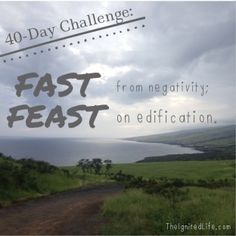
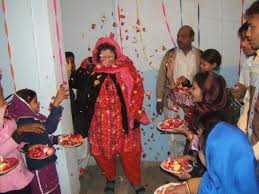






You must be logged in to post a comment.