Category Archives: Ways to Grow articles

Growing in God: Suffering and Joy

suffering-joy

Last time we discovered that thankfulness and gratitude are key to managing suffering.  This helps us in natural ways, but also gives opportunity for God to work supernaturally in our lives in the midst of difficulty. Jesus suffered for us (dying on a cross, 39 lashes) so he is no stranger to pain. He endured because of the joy awaiting him (Hebrews 12:2).  Part of that joy was for us to come to know God through him. He didn’t bemoan his situation. When we refuse to practise negativity in the midst of difficulties, our hearts are ready to receive the supernatural help to get through situations that are near impossible. God gives his grace, and in the midst of it, that grace can even bring joy.

When I wrote my earlier article on suffering, I only partly understood what it really means.  My understanding was incomplete, even though I had met Christians who had suffered greatly in northern Kenya, Pakistan, Sierra Leone and Northern Ireland.  I understood key aspects of successfully living through suffering.  My article suggested that most of these keys included attitude, gaining a refined identity as children of God, ministering comfort toward others, humility and realizing that God will somehow make sense out of the suffering.  Through these things the Holy Spirit would develop in us a deep perseverance, as well as character and hope (see Romans 5:4).  All of this is true; scripture implores us over and over again to not give up in the face of difficulty.  However, I still didn’t truly understand the paradox of joy and suffering. I have been pondering the issue of suffering for years.  Many people have, which is why it’s the number one topic in Nicky Gumbel’s book Searching Issues.

I had just returned from my first mission trip to Kenya in 1993.  I attended an evening service in Toronto with a friend who had journeyed with me through some of my own difficulties. My then-pastor Dale, had preached on Hebrews 12:1-3:  “Therefore, since we are surrounded by such a great cloud of witnesses, let us throw off everything that hinders and the sin that so easily entangles. And let us run with perseverance the race marked out for us, fixing our eyes on Jesus, the pioneer and perfecter of faith. For the joy set before him he endured the cross, scorning its shame, and sat down at the right hand of the throne of God. Consider him who endured such opposition from sinners, so that you will not grow weary and lose heart.”

Most people would have focused on our cheerleaders in heaven (the great cloud of witnesses), or perhaps the encouragement to not give up (run our race with perseverance, and not losing heart). This again gives us good reason to not give up.  Never, never give up (I’ve given up too early many times in the past). Yet I was drawn to the phrase “for the joy set before him he endured the cross.”  Joy?  In the cross?  In suffering?  I also had heard of persecuted Christians who showed joy at surprising times but I wasn’t yet ready to read the stories.  I was afraid to hear their stories but I needed to read them.  I remember going up for prayer to Dale’s wife, Linda. I asked her that I may understand what joy and suffering meant, and to understand joy in the context of the cross. I don’t think she understood what I really wanted, but she did pray (albeit with a perplexed look on her face).

When I studied in Tyndale Seminary, I took a New Testament course called Prison Epistles (Philippians, Colossians, Ephesians and Philemon).  The Apostle Paul wrote these letters while he was under house arrest in Rome. I remember Paul often writing about joy in the midst of the letter to the Philippians. It’s known as the book of joy. Joy, or rejoicing is mentioned 16 times in this letter! Yet, this is the apostle who endured so much persecution (read 2 Corinthians 1:8, 4:8-12, 6:4-5, and especially 11:16-33).  Paul was no wimp. He suffered out of love to reach as many people as possible. Yet in that time, God gave him the grace of joy.   I remember I had a brief flash of insight when I was writing the final exam in the Prison Epistles course.  It was about the paradox of suffering and joy – and I believed that Paul’s statement of being content in all circumstances was the key.  I still sought the core of that inner contentment – what was it?  What came to me was a very small, but bright intuitive flash – the centre of that joy, that contentment was trust.  Pure and deep trust in God, no matter what. Since I was still working on that part of my life, I didn’t get to expound on my discovery.  Paul’s contentment is made plain in Philippians 4: 10-14 (Message Version):

“I’m glad in God, far happier than you would ever guess—happy that you’re again showing such strong concern for me. Not that you ever quit praying and thinking about me. You just had no chance to show it. Actually, I don’t have a sense of needing anything personally. I’ve learned by now to be quite content whatever my circumstances. I’m just as happy with little as with much, with much as with little. I’ve found the recipe for being happy whether full or hungry, hands full or hands empty. Whatever I have, wherever I am, I can make it through anything in the One who makes me who I am. I don’t mean that your help didn’t mean a lot to me—it did. It was a beautiful thing that you came alongside me in my troubles.”

That trust is something I saw in the eyes of the people in Shantinagar, Pakistan. I remember seeing them as glowing, shining stars for Christ: humble, loving, full of radiant love.  I saw the same thing through the eyes of missionary Heidi Baker.  She is an apostle of radical love.  She and her husband head up Iris Global, a huge movement of missions, mercy and radical lovers.  She approached me once in a women’s conference and gave me roses. I remember the deep love of Jesus that poured out of her.  Here is one person who so completely loves and trusts God that she never says no to him. She laughs out of joy, simply because she is so filled with the grace of the Holy Spirit.

Heidi’s husband Rolland is just as amazing as his wife. I got to meet Rolland while at an Iris conference hosted by Iris Virginia (Richmond/Williamsburg).  I began my relationship with this community in June 2014, and continue to correspond, visit, pray with and minister with these folks as much as I can. I am awaiting my fourth visit in September. My second visit was for this conference and I was given the opportunity to receive lots of ministry.  Heidi had declared on the first night that some people needed to receive God’s joy in order to be used effectively for the gospel. I didn’t quite walk into that crowd at the altar, but I wasn’t far from them.  I should have been closer.  I was often sad and still grieving the loss of my only full-time job; and I still missed the Nelson, British Columbia community I came to love while I was working there. I had given my loss to God, but I didn’t yet have the joy/trust to overcome my loss. Heidi asked for Rolland to pray for all who were depressed.  Many wept deeply.  Sometime during that evening, someone had prayed for me, and I went down.  I spent a long time on that carpet, weeping almost as much as the poor people on stage.

The next night, I stood between the Iris book table and a pole in the church lobby with my new friend Ryan. Ryan was a philosophy student at Boston University and is brilliant (as Rolland himself is). While Ryan and I discussed and debated, Rolland tried to touch us many times on the arm or shoulder (he was deeply filled by the Holy Spirit, and wanted to share with us).  Rolland giggled and had a mischievous glint in his eye.  Sure enough, Ryan and I laughed and giggled as Rolland prayed for us.  I hugged a supporting pole in the church lobby and didn’t want to fall on the floor.  There was no carpet, this was hard tile!  It was also difficult for me to get up!  It didn’t matter.  Rolland was relentless and we received (although we did not fall down).

The next evening, much of the crowd didn’t return, since Heidi had gone on to another conference, far away from Richmond.  But Rolland and Mel Tari were still there. I was able to actually say hello to Rolland, and when I asked him how he was, he said, “Hi, I’ve come looking for revival, have I come to the right place?”  Surely he must have been joking, but I prayed for him anyway!  What a privilege (I was to get the same honour of praying for Heidi only four months later in Toronto)!  That night, holy laughter broke out in the meeting between the worship time and the sermon.  Rolland didn’t want to wait, and it seemed the right time to change the ‘usual format’ of the service. He invited people up to the front to receive. He jokingly called himself “Doctor tee-hee;” for he really does have a Doctor of Ministry degree (as Heidi has a PhD).  I ran up and stood right in front of him, so I ended up being one of the first “hit.”  Rolland thrust his microphone into my stomach and down I went.  It took me ages to get up later, so I sat at his feet while he talked.  While I was on the floor, the rest of my sadness poured out.  I was at peace.

You would think that Rolland would then speak on the theological nature of joy, or of God’s love.  But, no.  He gave a sermon of pure gold. He spoke on holiness and sin.  He spoke on what we desperately need in the church – repentance; and of all that keeps us from leading a holy life. Perhaps we were able to hear Rolland more clearly because we had already received ministry. Yet through it, I remembered Rolland’s words when he was praying for people earlier,  “That the joy was necessary as God was preparing us to die.”  What did Rolland mean by that?  Death of self?  Perhaps!  Many times our own selfish nature gets in the way. Or maybe he meant about inevitable suffering that comes in ministry and when you’re an outspoken Christian?  I had a sense that was what he meant.    The following day, I asked Mel Tari to pray over me that I would become fearless. He smiled and said, “I’d like to pray for you to come into your destiny instead.”  And so Mel did. By the end of the conference, and weeks afterward, I had a lasting taste of what the ‘Joy of the Lord’ meant (Nehemiah 8:10).  It really is about trust, child-like trust that is intermingled with contentment. It is deeper than a feeling, but includes emotion. It is love, trust, and joy that is not connected to circumstances.  Happiness is connected to circumstances, joy is not. I finally could understand joy.   I guess that meant that I was now prepared for suffering, but rather, what came in the wake was more subtle refining.  Some of this was: preparation for future ministry, learning to live on no income of my own, pouring out many volunteer hours in pastoral care (at Kingdom Culture and other places).

I am praying about attending a future Iris Harvest Mission School, and have been reading their required list for over a year.  I found more teaching on suffering and joy through Surprise Sithole’s biography, Surprise in the Night. As I mentioned in my last article (Growing in Gratitude: Paradox and Ministry), Surprise has an amazing way of seeing all of life through joy, despite the tremendous suffering he has endured. He can still have a “good day” every day. Rolland shares in his doctoral dissertation the five values of Iris: God can be found, dependence on miracles, humility/going to the least of these, being willing to suffer and rejoicing in the Lord.  He ties the last two values together when he says, “the joy of the Lord is not optional, and it far outweighs our suffering. In Jesus, it becomes our motivation, reward and spiritual weapon.  In his presence is fullness of joy, and with Paul we testify that in all our troubles, our joy knows no bounds (2 Cor. 7:4). It is our strength and energy, without which we die.” (Rolland Baker, Toward a Biblical Strategy of Mission. P 112)

That extreme dependence on God puts one in a good place, because then God can give us the grace, and the joy we need as we trust him.  This trust isn’t harmed if you’re deeply suffering, because you’re already rooted into his unshakeable grace. Neither is it harmed if you’re in preparation and want to run ahead but know you cannot.  You’re stuck in the place of trusting and waiting on God – for his hand in provision, direction and ministry.  He is the same God, but through this experience, he changes you and his glory inside you begins to shine out of you.  Why do many persecuted Christians seem to smile in the midst of such torture?  The glory within them leaks out. Their eyes are focused on Jesus, and they become even more filled with grace, and that’s what the persecutors see. How are these people carried?  By deep and sure grace.  Strange joy in the midst of horrible circumstances.  Now that I understand, it’s impossible to ignore.  Lord Jesus, help us to learn from those of us who lead the way in shining for you.  May we shine for you as much as these people shine in persecution and even death.

Rolland’s wife Heidi shares a vision she was given of at least a million needy children.  Her voice clip is included in Jason Lee Jones’ song “Song of the Martyr” (which is on his cd, Face to Face).  The children from Heidi’s vision were from all nations.  Jesus said to Heidi, Go give them something to eat, but Heidi was overwhelmed.  Then Jesus took a piece of his broken body and said to her, “Because I died, there will always be enough.”  I believe it was about more than just enough food and enough gospel message.  Heidi took the piece of flesh and it turned into bread, and the bread multiplied over and over. She was also shown that she would drink the cup of suffering, but she would also drink the cup of joy.  Joy is necessary to overcome; after all it is rooted in deep trust! Below I have posted a video of Jason Lee Jones singing a special song about some of the martyrs.  This is a live version, rather than the version on his cd, Face to Face (which I highly recommend) May you be as impacted as I was.

Next time we will explore growing in our identity in the midst of transition.

Blessings,
Laurie-Ann Copple


Jason Lee Jones “Song of the Martyrs”
Jason’s website is: http://godbreed.org/  He is one of the leaders of the Iris base at Savannah Georgia, USA.

flower-in-sidewalk

Growing in Gratitude: Paradox and Ministry

Chalice

Last time we discovered that it is possible to eliminate negativity and complaining in our lives though a lifestyle of thankfulness and gratitude.  In February (2015), I attempted to go on a negativity fast for Lent, and it was for the most part- successful.  However, there were challenges. After I declared that this was a fast for God, not only were everyday challenges more of an uphill battle, but there were other difficulties that made some days “screaming days.”  Difficulties were exacerbated by: roller-coaster hormones (after all, I am in the menopause stage of my life), financial stretching, an overlapping schedule with different ministries, a lack of sleep, and even more important, I felt like my life was stuck behind a giant pause button.  During that time, I had to lean very heavily on the Lord for extra grace.  I had to believe (along with the Apostle Paul) that God’s grace “is sufficient for [me], for [God’s] power is made perfect in weakness.” Therefore I will boast all the more gladly about my weaknesses, so that Christ’s power may rest on me. (2 Corinthians 9).

Cup of Thanksgiving overflows
Some people could see my initial efforts as wimpy.  Full-time missioners and missionaries often minister no matter how tired they feel.  Many workers in the secular world work very long hours, as I did in the radio broadcasting world. I am not one for encouraging burn-out, for we all need Sabbath times of rest. Yet sometimes we are simply worn out not by work, but by complaining, bitterness and negative attitudes.  So when you give thanks in all things (1 Thess. 5:18), your cup is no longer half empty like the pessimist. Your cup is far more full than the optimist’s half-full glass.  Looking at the glass isn’t just about perspective, although it does include seeing life through different eyes. The eyes of a thankful Christian are opened to what God is doing in us and around us.  This isn’t just a human thing – it’s a supernatural thing.  Your eyes become open to the “more.” This is how the cup turns from being half-full to overflowing. The Psalmist says “You anoint my head with oil. My cup overflows.” (Psalm 23:5)  The overflowing cup is a symbol of being so full of the Holy Spirit that God’s glory and love easily spill out of you.  That’s exactly the time that God works through you, because it is clear that you are more than the “natural you.”

Cup of Suffering and of Joy
Our cup is also a cup of Jesus’ pain and suffering. “Is not the cup of thanksgiving for which we give thanks a participation in the blood of Christ?” (1 Cor. 10:16) The Apostle Paul talks about sharing the ‘fellowship’ of Christ’s suffering as part of truly knowing him. (Phil 3:10)  How can gratitude and suffering be in the same cup? How can we experience joy in the midst of suffering?  How can we encounter God’s glory in the midst of suffering? Are we even willing to suffer alongside Christ? This cup of suffering is what Jesus drank when he died for us (Matt 26:26-27, Mark 14:22-23, Luke 22:17,19). While we don’t have to go through crucifixion as Jesus did, we do go through suffering and times of difficulty. Sometimes we even go through persecution because of our faith in Jesus Christ and ministry for him. Jesus walks alongside us, and he carries us through these difficulties.  When we thank him in the midst of difficulties, we acknowledge his presence, and allow him to work in our hearts despite the refining fire of challenges. We aren’t suffering alone. Jesus is with us.

Suffering and Gratitude
Suffering can make us bitter or cause us to grow.  If we keep a good attitude of thankfulness, the suffering actually refines us.  It takes us through a process which builds in us perseverance, character and hope (Romans 5:3-4). When you keep thankful in such circumstances, it helps keeps your eyes centred on what God is doing in your life.  The process actually is circular – we start with thankfulness and end up in gratitude.  Thankfulness acknowledges who God is and how he is working in your life, despite the difficulties.  Gratitude is the growing state of your heart as God uses the refining process to create good soil.  This good soil is the same believing, faithful heart that Jesus refers to in the parable of the sower (Mark 4:3-20).

Recently, my husband and I returned from a trip to Williamsburg, Virginia. We spent special time with our dear family-friends in the Iris Virginia church. The visiting worship leader, Jonathan David Pettit,  prophesied over me that I was like “spiritual Miracle Grow” (a plant fertilizer).  He told me that “because I had not allowed my heart to become bitter, despite the ‘crap’ in my life, he was using me overcoming these experiences as fertile soil.” He would use these experiences to help others overcome their difficulties. He would use me as a cheerleader for other’s dreams, because I had ‘been there.’ In the moments Jonathan shared, I had a profound sense of gratitude for God working out the messes in my life in a way that gives God glory.

How do we develop this heart of gratitude?  Perhaps the best way is by disciplining ourselves to stay thankful, no matter what we encounter.  Gratitude becomes a growing response we develop, and God deepens his imprint in our lives. Our eyes and ears become increasingly more open to his love and blessings, and our faith and compassion for others deepen.  We begin to develop a fruit of gratitude as we believe God’s promises and grow more thankful; this is similar to how one develops the fruit of the Spirit.

What is the fruit of the Spirit? These are: “love, joy, peace, forbearance (patience), kindness, goodness, faithfulness,  gentleness and self-control (Gal 5:22-23).  We grow in response to what God is doing in our lives, and if we keep a good attitude, we are thankful. Henri Nouwen taught that when we encounter the fruit of the Spirit in others, we experience them as gifts. When we continue to be surprised by new manifestations of life and continue to praise and thank God and our neighbour, routine and boredom cannot take hold. Then all of life becomes a reason for saying thanks. Thus, fruitfulness and gratitude can never be separated.” (Lifesigns 70-71) Thus, “gratitude flows from the recognition that all that is, is a divine gift born of love; it is freely given to us so that we may offer thanks and share it with others.” (Robert Jonas, “Henry Nouwen” P 69).

Paradox of Gratitude, suffering and ministry: “How to have a Good Day”
So gratitude grows despite the paradox, and because of the presence of the Holy Spirit, gratitude can grow deeper alongside the paradox of suffering and joy.  Earlier I mentioned about people working tirelessly despite having difficult circumstances.  Some people could call that having a bad day, but they still press on with what they have to do.  Iris leader Surprise Sithole believes that it is always possible to “have a good day” despite circumstances, and he passed this belief on to missionaries Rolland and Heidi Baker.  Rolland shares, “One day we [Surprise and Rolland] were running a bush outreach meeting in Malawi, and on this day, Surprise delivered what was, for me, his most memorable sermon.  Malawi had been in famine most of the year. The crops had failed. It was extremely hot, almost 50 degrees C. The people hadn’t had any proper food in months. A lot of people were sick, and the bubonic plague had just come to this particular village.  Surprise’s sermon that day was entitled, “How to have a Good Day.”  No matter where we are or how bleak the circumstances, Surprise is always having the best day of his life. Irrepressible joy like this culturally clashes with much of the church.  I didn’t like it myself for a long time.

What I’ve learned, though, is that we minister to others out of the places in our lives where God has ministered to us. God works in us to produce a miracle, and we minister that miracle to others.  God has given Surprise the gift of joy.  When he ministers, the Lord uses this joy, supernaturally, to touch others. Some might think it inappropriate.  Actually, it is entirely inappropriate. He is bringing an authentic expression of joy to those who have none, and Jesus is producing joy in them.  Think about what Jesus has done in your life and how you express it to others, sharing His blessing.”  (Heidi and Rolland Baker, Reckless Devotion. P 23-24)

Gratitude and “Miracle Grow”
Surprise has grown in the paradox of suffering and joy (read his book Voice in the Night) through thankfulness and gratitude to the Lord. It shines out of everything he does in ministry, and Heidi Baker is very similar.  When you hear Heidi share at the end of the Compelled by Love film, she looks over her life and ministry and says that she is so grateful to Jesus for all he has done – in their ministry and generally for his sacrifice and love for all of us.   Earlier Jonathan David said that I was becoming like Miracle Grow.  However, gratitude in the midst of difficulties, gratitude in the midst of outreach and ministry is an important key to growth in these conditions.  It is one of the keys of the persecuted church that connects joy and suffering.

Earlier I mentioned Henri Nouwen.  I had the privilege of meeting him when I was a student at University of Toronto.  He spoke at St Michael’s and talked about putting our brokenness under the blessing of the Lord.  He would heal our wounds, then minister through them to others. Jesus embraces all of our lives, the sorrow, the joy and every moment.  Nothing is separate from God.  “Jesus calls us to recognize the gladness and sadness are never separate, that joy and sorrow really belong together, and that mourning and dancing are part of the same movement.  That is why Jesus calls us to be grateful for every moment that we have lived and to claim our unique journey as God’s way to mould our hearts to greater conformity with God’s own. The cross is the main symbol of our faith, and it invites us to find hope where we see pain and to reaffirm the resurrection where we see death. The call to be grateful is a call to trust that every moment of our life can be claimed as the way of the cross that leads us to new life.   (Henri Nouwen, “All is Grace” 39-40)

So gratitude directs us to where the Father would lead – since it keeps our eyes on God.  He leads us into action, and he leads us into rest; all depending on the season he puts us in.  That is the paradox. Suffering and joy? Gratitude in the midst of difficulties? Can we even figure out thankfulness and gratitude?  Not entirely – but we have spent five posts on this aspect of our faith.  It is one that goes well beyond a feeling of being blessed to being carried into what God has for us.  Gratitude should be unending, because our faith journey does not stop.  Jesus is always leading us somewhere.

Next time we will further explore the cup of suffering and joy. It’s a lesson the persecuted church through the ages can teach all of us.  Until then, be blessed, and grow in God.

Blessings,
Laurie-Ann

Laurie-Ann lives in Ottawa, Canada.  She works for Kingdom Culture Ministries (in Gloucester, Ontario) in social media/pastoral care and administration. She attends that church and St Paul’s Anglican Church in Kanata, Ontario.  She is available to speak to small or large groups on a faith donation basis.

 L-A on KCM social media in Wburg

Laurie-Ann working remotely on social media-pastoral care ministry

Growing in Gratitude: I tried to give up negativity for Lent

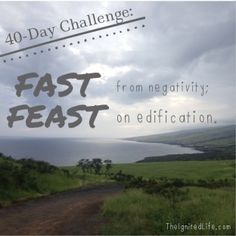
40 day challenge

Last time we discovered that gratitude is connected to faith and deep joy that leads us to drink the cup of thanksgiving.  It also can become a daily discipline, especially when you are taking on this journey in small steps. Yet sometimes we are called to times of deeper fasts.  We are often told that during Lent, we are to give something up and take something on.  Often folks give up coffee, tea, chocolate and other sweets.  One year I gave up television, and another credit cards. Others give up Facebook and other social media. This year I wasn’t sure what to give up, until I began working on February’s article for Ways to Grow in God.

I had recently finished the third article of a series on thankfulness and gratitude.  Originally I had planned to write only one post on thankfulness. However, there was so much more to the topic than I realized!  It has turned into a mini-series on one of the many ways to grow in our Christian faith.  I still have another article to write on gratitude as a lifestyle in the context of difficult ministry.

One major barrier to thankfulness and gratitude is a complaining attitude. You may remember that ingratitude, grumbling and complaining kept the Hebrews in the desert land between Egypt and Canaan, the promised land. This attitude can also keep some of us stuck in in the quicksand of nags, doubts and complaints and it feels like we are pulled down by this bog. This situation can even be life threatening!  Endless complaining and nagging steals the joy and life out of you, even if you try those methods to motivate, they often back fire. (Nagging spouses can relate to this phenomenon)

I’ve been learning more about the “joy of the Lord,” which the Old Testament prophet Nehemiah calls our strength (Neh. 8:10).  That joy actually is more of a deep contentment and trust in God than actual laughter, but it can include this as well. It is an unshakeable knowing that God is faithful; you believe you will be okay despite difficult circumstances. It is a joy that comes even in suffering, and is far deeper than the optimist’s ‘half-full’ glass.  It is more like the cup of thankfulness that runs over (Psalm 23:5).  This cup of joy sustains you even in the deepest, darkest suffering, persecution and difficult times. The cup sustains us because of the One who gives us the cup. When you drink this cup of joy, your eyes are completely focused on Him.

So, since I want to journey with more of that joy, I took a stand on negativity and complaining in my own life.  I declared along with my Kingdom Culture pastor, Shawn Gabie, “If I have a problem, there is a solution.” And if I get impatient, I will leave my struggle in God’s hands.

During Lent 2015, I tried a negativity fast, and I had some challenges along the way.  Some days I fell completely off the wagon, since a school that I applied to had dropped a huge “pause” button in my life and ministry.  How could I be positive about that?  However, a delay is not a “no,” and sometimes you need more time to prepare for what is next. Can you relate?  Sometimes life throws you more difficulties than heavy traffic and a set of red lights on the road to your next destination.  How many of us get upset in heavy traffic?  How many of us are impatient when you want to ‘do’ something, but that time is ‘not yet?’  And what about those who deal with other things that hold them back in their daily lives? It may be time for a “re-frame!”

I learned the art of “re-framing” in one of my counselling classes at Tyndale Seminary (Toronto, Canada). The idea is to look at a ‘bad’ situation through a new perspective.  It is to take how you see the picture of your difficult situation and see it through a new ‘frame’ of mind. Often when you perceive a difficult situation negatively, it seems even more menacing and it “looks” like you’re facing an impossible obstacle.  What do I mean by this? Think of how you may feel if you’re having a ‘crummy’ day and you believe the ‘crummi-ness’ will last all week.  You may feel as if a rain cloud is continually over your head, despite the weather. You might feel that negativity encompassing all of your life, when in reality, that difficulty is a very small part of your life!  So along comes a friend or counsellor who has the art of re-framing. They see possibilities in your difficulty.  They see a positive challenge that offers growth and reward on the other side.

It helps to have a friend who can encourage you in this way.  However, you can also learn to do this yourself by choosing to look at every aspect of your life in a positive way. Yes, this is a challenge, but the Holy Spirit can help us – he is the ultimate  ‘re-frame’ counsellor in our lives.  God never puts us down; he never condemns us.  He convicts us of sin, yes, but he cleanses us when we come to him and say we are sorry.  He also shows us possibilities.

Have you considered taking up a negativity fast? You may have missed Lent, but this is a journey you can take ANY time of the year. Leaders Steve and Wendy Backland of Igniting Hope Ministries encourage this kind of fast for forty days (which is the length of Lent without counting the Sundays).   Christian neuro-scientist Caroline Leaf also works on the same principle in a 21 day period (only concentrating on eradicating one negative thought pattern rather than many).

A negativity fast also includes feasting on and thinking positive thoughts, like Philippians 4:8 encourages us to do: Finally, brothers and sisters, whatever is true, whatever is noble, whatever is right, whatever is pure, whatever is lovely, whatever is admirable—if anything is excellent or praiseworthy—think about such things (Phil. 4:8 NIV).

Consider yourself a pilgrim in the land of the positive. I wish you well on your journey as we walk along together with thanks and gratitude.  Next time, we will continue on with the Cup of Gratitude as we explore gratitude in the context of ministry.

You may also find this article by Jessica Hullinger helpful. She also took a negativity fast the same time I did!  no-complaining fast

Blessings,
Laurie-Ann Copple
Ottawa, Canada
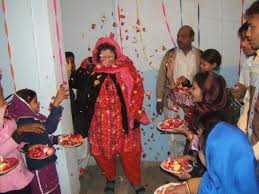
Laurie-Ann volunteers for Kingdom Culture Ministries in admin and media. She also has shares two radio shows at CKCU 93.1 FM. The picture below is when Laurie-Ann ministered and taught in Lahore, Pakistan in December 2007/January 2008. She was greeted and showered with love and rose petals by local Christians.

L-A in PK

Growing in Gratitude: The Cup of Thanksgiving

thankfulness chest

These past months, we have explored growing in our faith through thankfulness to God (and in a smaller way, to others). We learned to be thankful for the good, or what will turn to ultimate good in our lives. Thanksgiving can be found in acts of worship, and in thinking far outside our circumstances.  Thankfulness is an expression, or fruit of having a heart of flesh rather than a heart of stone (Eze. 36:26-27). We also began to explore seeing through the eyes of thankfulness.  Sometimes the word gratitude is shown as an expression of thankfulness. I mentioned gratitude eight times in December’s article due to the intimate connection between thankfulness and gratitude.

In January, I discovered there was so much more to thankfulness and gratitude. I was impressed that this area of our faith walk deserves a pause to think deeply about thankfulness. Thankfulness is part of our healing and re-storying our lives through the eyes of faith. Many Psalm writers did this in ancient Israel, including King David. Thankfulness can be combined with soaking prayer so that our act of thankfulness goes even deeper into our soul.  This means that through the Holy Spirit, thankfulness is a key that God can use to transform us. Thanks is also part of the very prayer we use to come to initial faith in Jesus Christ (often called the ‘sinner’s prayer’ but simplified in the Alpha movement as “sorry-thank you-please”).  Thankfulness needs to be a daily part of our walk – it helps us keep our eyes on Jesus, especially if you are experiencing difficult times or you’re in transition from one stage of life and ministry to another stage.  Let’s explore thankfulness and gratitude further.

Is there a difference between thankfulness and gratitude? Or are they aspects of the same thing?  I researched the two words, and often the two concepts are interchangeable. However, I had a sense that gratitude is deeper than thanks. Gratitude is an internal emotion of deep thankfulness. The act of giving thanks is an outward action term; it’s a desire to offer your thanks for something that’s been given to you; or something that you already have.   Personal coach Linda Ryan believes that “being grateful is appreciating something that you have not yet received, but [you] have faith it’s coming.”  She looks at it like this:  “I am thankful for my wonderful family and friends; I am grateful for all the great people I am going to meet.  Being in a state of gratitude keeps us mentally and emotionally connected to our goals.”  http://www.coachlindaryan.com/2011/11/dont-just-be-thankful-be-grateful/ 

So being grateful also makes us more confident and less restless in life’s “in-between” times; it gives us focus.  Michael Austin Witty  (Looking for the Faith-Gratitude Connection) takes this further when he says:  “Before a miracle happens, thankfulness is faith.  Afterwards it is gratitude.” This statement implies that thankfulness and gratitude are a process that we can grow in, which makes good sense to me.  However, I believe you can experience gratitude when you receive God’s love right now, not just in the future. Say God is radically touching your heart, by healing a deep emotional wound. Right now, the Holy Spirit fills you with love and forgiveness. Your entire being feels light, loved and full of hope. So then, what’s the primary emotion you will feel if not gratitude?  Say God uses you in a very special way that you did not expect!  He brings a hurting person to you and you are given an encouraging word, compassion and a gift of healing right when they need it most.  He has had you ‘stop for the one.’  So you are grateful that you got to be a part of that special moment – God is here with us right now!

God doesn’t just work in the past and the future.  Too many of us lose the opportunity of receiving what God wants to bless us with today – this happens if we only focus on the future.   Here’s an example:  I applied to a three-month mission school in southern Africa over five weeks ago. I became more and more anxious on whether or not I’ve been accepted. I kept looking at the ministry site a couple of times a day to know one way or another.  While it is normal to be excited at the possibility of ministering in Africa in the coming months, the anxiety drew my eyes away from God. I was beginning to lose focus on what God is doing right now during my time of preparation.  I began to grow restless and lose my peace.  However, I was gently reminded by a close friend that I need to “live in the now and let God take care of tomorrow.”  Does this sound familiar to you, like  Matthew 6:33? (Seek first the Kingdom of God and his righteousness, and all these things will be given to you as well)  While the biblical concept of seeking God first is about worry and provision, it also deals with trusting God’s sovereignty. Trusting that God is in control and being grateful that he is in charge, opens up a deeper place in our hearts for God.  While we wait for answers, Jesus calls us to that secret place where your eyes are only on him.  You spend valuable time with him.  How can one work in the mission field or any kind of ministry without spending time with God first?  It is essential.

So, I can sing along with the writer of the worship song “Give thanks with a grateful heart” – that God has my back.  I can trust him to work out what I need and what I will be doing.  And while I wait, I’m deeply grateful for being carried like the person Jesus carries in the Footprints poem written by Mary Stevenson.  When you are in gratitude, God gives you even more of what you need. This includes better health, peace of mind, less stress, alertness, enthusiasm, determination, optimism, and energy. One way to help expedite this process is to go on a negativity fast for at least 21 days (read Dr. Caroline Leaf and/or Steve and Wendy Backland). By the end of that time, you will have trained yourself to no longer be a complainer.

Gratitude is connected to deep faith, and even joy.  One blogger says that “faith and thanksgiving are close friends.  If you have faith in God, you will be thankful because you know his loving hand is upon you, even though you are in a lion’s den.  That will give you a deep sense of joy, and joy is the barometer of the depth of faith you have in God.” [http://christiananswers.net/q-comfort/growing-thanksgiving.html] That gratitude grows in two ways: one, as you are completely dependent on God (as in the Footprints poem) and two, as you actually see answers to prayer happen in your life.  When this happens, don’t forget these little victories.

Thanks and gratitude can and do change your perspective in the best way.  A “treasure chest of thanks” or a “gratitude jar” can help you remember and itemize each day’s blessings.  When I was part of Kootenay Christian Fellowship in Nelson BC, I set up a prayer jar in the back of the church so I could collect prayer requests for the email prayer team.  Had I stayed in Nelson, I would have added a gratitude jar of answered prayers and other blessings.  You can also have a gratitude jar in your own home!  Some churches have times where they share testimonies with the leaders (and congregation).  This time is like an audible gratitude jar!  What is a testimony? Some dictionaries call a testimony: a legal proof, a divine decree or a recounting of a religious experience.  Others, such as Merrium-Webster, add “an open sign,” an open acknowledgement, an evidence and a “firsthand authentication of a fact.” These are real blessings that have come our way. Remember them and be grateful, since the God who gave them won’t stop in blessing you.

Let’s look at the story of the feeding of the 5,000 in the Gospel of Matthew. Before the miracle that stretched the bread and fish, Jesus gave thanks.  That thanks opened the door to God’s miracle of provision.  Something similar happened to Iris Global’s Heidi Baker when she was in a difficult situation.  They had just been kicked out of an orphanage and had limited resources.  A friend from the US Embassy decided to bless Heidi’s family with a pot of chili and rice. The food was enough for Heidi’s family of four, but after a prayer of thanks over the food, the meal stretched to feed everyone present. This wasn’t just a case of adding a little more rice to the mix, but a literal miracle.  Heidi said, “We began serving and right from the start, I gave everyone a full bowl. I barely understood at the time what a wonderful thing was happening. But all our children ate, the staff ate, my friend ate, and even our family of four ate. Everyone had enough.” (Rolland and Heidi Baker, There is Always Enough, pg. 52)  Heidi even says near the closing of the Iris movie Compelled by Love, that she is so grateful for what God is doing each day. That gratitude grows daily.

Gratitude like this becomes an everyday lifestyle and a discipline. Earlier I had mentioned doing on a negativity fast.  One action Steve and Wendy Backland had tried with their congregation was to give some people a ‘no-complaint wristband.’ You can also look in your gratitude jar and read some of the entries if you are feeling down that day.  Gratitude can be developed as a discipline by choice.  Henri Nouwen wrote that “The discipline of gratitude is the explicit effort to acknowledge that all I am and have is given to me as a gift of love, a gift to be celebrated with joy. Gratitude as a discipline involves a conscious choice. I can choose to be grateful even when my emotions and feelings are still steeped in hurt and resentment.” (Henri Nouwen as quoted in Robert Jonas, Henri Nouwen.)  Henri Nouwen also noted that “The choice for gratitude rarely comes without some real effort. But each time I make it, the next choice is a little easier, a little freer, a little less self-conscious. Because every gift I acknowledge reveals another and another until finally, even the most normal, obvious, and seemingly mundane event or encounter proves to be filled with grace. There is an Estonian proverb that says: “Who does not thank for little will not thank for much.” Acts of gratitude make one grateful because, step by step, they reveal that all is grace. (Henri Nouwen, The return of the Prodigal Son, pg.85)

Gratitude is also like a fruit of the Holy Spirit. The named fruit of the Spirit are:   love, joy, peace, patience, kindness, goodness, faithfulness,  gentleness, and self-control (Gal 5: 22-23).  It is a by-product of deeply abiding in the grace of God and relationship with him.  Henri Nouwen also talks about the fruitfulness of grace.  He says,  Gratitude flows from the recognition that all that is, is a divine gift born of love and freely given to us so that we may offer thanks and share it with others.  The more we touch the intimate love of God which creates, sustains, and guides us, the more we recognise the multitude of fruits that come forth from that love (Robert Jonas, pg 68).  Without a spirit of gratitude, life flattens out and becomes dull and boring. But when we continue to be surprised by new manifestations of life and continue to praise and thank God and our neighbour, routine and boredom cannot take hold. Then all of life becomes a reason for saying thanks. Thus, fruitfulness and gratitude can never be separated. (Henri Nouwen, Lifesigns. P.70-71)

Gratitude brings us to the cup of thanksgiving!
In the New Testament, thanksgiving is the very essence of the Church’s life. In liturgical churches, the word eucharist actually means thanksgiving!The very centre of the Church’s liturgical worship of God is when, in remembrance of all His saving acts in Christ, the faithful “lift up their hearts” and “give thanks unto the Lord.” (Orthodox church in America)

Pastor Jim Reimer from Nelson, BC shared the connection of gratitude and the Cup of Thanksgiving (1 Cor 10:16 NIV) while I was still part of his congregation. He noted that there is a deep connection between Eucharist (or in some churches, Communion or the Lord’s Supper) and thankfulness.  As we receive the wine and bread, we are thankful for Jesus’ sacrifice. We remember what he did for us.  But even more, we are grateful for his presence in our lives, and what he continues to do.  He brings us to more and more freedom. He does not leave us the way we came to faith, but causes us to grow.

Gratitude becomes the drink in which we grow in love.  Gratitude keeps us connected and wanting to connect to Jesus in a deeper way. And in a sense, everyone has a cup to drink.  1 Thess. 5:18 encourages us to give thanks, for this is the will of God in Christ Jesus for you.  So instead of our cup being half empty or half full, OUR cup, the cup of thanksgiving, runs over (Psalm 23:5).  The paradox is that Jesus’s experienced his cup of pain, suffering, treason and death (1 Cor. 10:16), but through Christ, it is our deliverance.  Jesus becomes our cup of thanksgiving.  For this, and him, I am deeply grateful.

Next time, we will continue to explore gratitude, and what we can do when life just isn’t going our way. Meanwhile, drink deep of the Cup of Thanksgiving.

Blessings, Laurie-Ann Copple
Ottawa, Canada

Selah: The pause between thankful and grateful

selah pic

Last time we discovered we have a lot to be thankful for.  We also found that being thankful is good for us – in our walk in faith and in our daily lives.  Thankfulness grows our hearts so we can be filled with more love.  When you have an expanded heart, you can experience more joy, which is also our strength (Neh. 8:10). This requires waiting, and pause for reflection.

I had meant the next article to be on being grateful beyond thankful.  However, I discovered there was far more involved in the area of growing in thanks. I found that this is a very deep area of our faith.  It’s the underpinning of so many areas in which we grow closer to God.

Thankfulness is part of our healing: both inner (emotional) and physical.  Just think of the one leper who returned to give thanks to Jesus after he was healed!  (Read Luke 17: 11-19)

Thankfulness is also part of our first step of faith.  Many of you came to faith in Jesus Christ through praying the “sinner’s prayer” of repentance. One simple form of that prayer is featured in Nicky Gumbel’s “Why Jesus” pamphlet that we use in the Alpha Course.  Nicky highlights this prayer “can be summarized by three very simple words:  Sorry.  Thank you.  Please.”  (Sometimes when I’m on the mission field or with people asking about faith, this summary is what comes to mind).

Some of you reading this article may not have faith in Jesus Christ yet, even though you have a desire to grow deeper in God.  If you pray this prayer with me, and mean what you’re praying, you are now a Christian.

Sorry!  “You have to ask God to forgive you for all the things you have done wrong and turn from everything which you know is wrong in your life.  This is what the Bible means by ‘repentance.'”

Thank you!  “We believe that Jesus died for us on the cross.  You need to thank him for dying for you and for the offer of his free gift of forgiveness, freedom, and his Spirit.”

Please!  God needs you to invite him into your life, he’s been waiting for your ‘yes.’  “You need to accept his gift and invite him to come and live within you by his Spirit.”

Here is a simple prayer that incorporates sorry, thank you, please (you may find it helpful if your mind goes blank on how to start):

“Lord Jesus Christ, I am sorry for the things I have done wrong in my life (take a few moments to ask his forgiveness for anything particular that is on your conscience).  Please forgive me. I now turn from everything that I know is wrong.  Thank you that you died on the cross for me, so that I could be forgiven and set free. Thank you that you offer me forgiveness and the gift of your Spirit. I now receive that gift. Please come into my life by your Holy Spirit to be with me forever.  Thank you Lord Jesus, Amen.”  (Nicky Gumbel, “Why Jesus?” (Alpha North America, 2008) p21

If you prayed that prayer for the first time, welcome to the family of Christ!  You are now my brother or sister.  Make sure you seek out a church, and small group of Christian believers who can encourage you in your faith, pray with you, and study the Bible along with you.  The Christian faith is not meant to be lived in isolation on your own, but with each other.  However, if you are living in an area where Christians are persecuted, then ask God for wisdom on when to share and with whom.  He will keep you close to nurture your faith, heal your heart wounds and fill you with love.  He can also bring you to people who can grow with you in faith. Yet most important, God will never fail you, for he is very definitely faithful.

And so, salvation is the foundation of things to be thankful for as we focus on and worship the Lord. The Apostle Paul encourages us to pause and remember all good things, which cause us to be thankful.

Summing it all up, friends, I’d say you’ll do best by filling your minds and meditating on things true, noble, reputable, authentic, compelling, gracious—the best, not the worst; the beautiful, not the ugly; things to praise, not things to curse. Put into practice what you learned from me, what you heard and saw and realized. Do that, and God, who makes everything work together, will work you into his most excellent harmonies.” Philippians 4:8 (Message version)

We can also combine thankfulness with soaking prayer. If you’re new to the idea of soaking prayer, I write about it in my article from March 2013 (Slow down and let God’s love fill you). When you are filled with God’s love, you become more thankful, and consequently open to receive even more of his love.  Pause and let his love fill you! And always be thankful.

We stop again to think on the word Selah, which often appears in the Psalms (71 times as well as 3 in Habakkuk). Some writers believe it refers to a musical interlude between sections of reading Psalms. Others see it as a pause, or liturgical meditation on what the listeners have heard in the recited Psalms.  For this article, we will borrow the concept of Selah as a pause and reflection.  Sometimes it is necessary to stop and remember all we are thankful for before we continue on our journey.  Funerals are like that – although we are sad at the loss of our loved one, we also celebrate their life and are thankful that they were with us for the time we had them.  These people were part of our life stories.

Let’s continue with the idea that our lives are like stories.  When we walk through difficulties and joys, these impact us and become part of our stories; part of who we are. Sometimes circumstances and pain may cause us to become stuck in grief.  It is good to grieve, but it is not good to become stuck in the same emotions in an endless loop. It also is not good to become stuck from painful memories that cause us to be locked in a prison of unforgiveness. When we forgive those who hurt us, we can choose to react  in a positive way. We take charge over our own story, with God’s help.  We aren’t accountable for what has been done to us, but rather, for how we react. When we choose to react positively, and make a lifestyle of thankfulness, the fruit we show is sweet.

We can re-story our own lives by ‘psalming.’  King David and other Psalm writers did this in the book of Psalms. Some of those Psalms start out rather angry (Read Psalm 69) but end up with praise. David cries out to the Lord with everything in his heart.  He trusts that God is hearing where his heart is at; and then he turns his lament into praise and thanksgiving.  Yes, he said some pretty nasty things about his enemies, but how better it is to confess that to God, then let it fester in his heart!  I personally believe that God likes it when we are honest with him.  He knows what is in our hearts, and is waiting for our invitation to set us free.  You can write your own psalm before the Lord.  It doesn’t have to be fancy. But it does need to be honest, and allow you to trust God more for the great ending.

Being thankful also helps us in transition from one stage of your life to another (being phases of your physical life, or seasons of your spiritual life). We don’t always know where we are going in the midst of moving from one place to another. Sometimes we feel lost in the desert.  Other times we just need a rest stop on the highway. We may feel like we’re in the middle of a storm and can’t see much beyond our circumstances.  This is the time to pause and remember God.  This is the time to remember all we are thankful for!  Thankfulness helps keep our eyes on what God is doing. Thankfulness keeps us from keeping our eyes inward on our own circumstances.  Even if you don’t hear the still small voice of the Holy Spirit right now, you will.  You are still being carried towards your next destination.  He is growing in you a deeper trust as you grow your heart deeper through prayers of thanks.

So, while I am continuing to think of the deep connection between thankfulness and gratitude (which is to come soon), remember to pause and give thanks to God.  You can fill out your thanks items on a piece of paper, on your computer, or even on your phone (I use the “Remember” application on my phone). You may be surprised what the Holy Spirit reminds you of!

Have you given thanks today? Next time we will grow in gratitude as we share in the cup of Thanksgiving.

Yours in Christ,
Laurie-Ann Copple
Ottawa, Canada

selah think about it

selah hebrew

Growing in God through thankfulness: What are you thankful for?

what are you thankful for

Last time we learned that when we allow ourselves to depend on God in our service to him, our attitude changes. God has invested special gifts in us – both natural and supernatural. The gifts we are given became an opportunity to serve the Lord and others in a unique way. When we serve, our attention is in two parts – on God, and on the task at hand. Sometimes that task involves stopping for the one. Other times that assignment involves practical service so that needed infrastructure is there for ministry: feeding the poor, clothing the needy, loving broken people, encouraging people through arts that inspire and bless. That requires administration, health care, engineering, and many more skills that take hours to develop. When we serve, we need to keep our eyes on the one who loves us and gives us opportunities. It’s not like we have to serve out of obligation. If you are doing that, then it’s better to set aside the service for a while and just receive God’s love. If we never do a single thing for God, He will still love us very deeply. However, when we do serve, it gives us many ways to express our love and gratitude to God. That gratitude causes us to focus on Jesus and allow our hearts to be filled deeper and widened to contain more love.

How do we develop a thankful attitude? Some people have a hard time being thankful – especially if they feel entitled, and self-focused. How do we rid ourselves of cold hearts, entitlement thinking and ingratitude? A cold heart could be called a heart of stone; a heart where the conscience is seared and there is no compassion. The very opposite of thankfulness and gratitude is unforgiveness, bitterness and complaining. Do we really want to go there? Bitterness causes all kinds of complaints and mean spirited acts. Hebrews 12:15 warns us to not store up a bitter root grows up in our heart and so defile us (and many). When we are bitter and self-focused, we fall into a form of worshiping ourselves. Unfortunately this is the very heart of the old baby boomer motto of “me, myself and I” and “looking out for number one.” If you focus on yourself, you’ll find lots to complain about! And so the cycle spirals down into self-pity and what Leanne Payne calls the ‘hell of self.’ This self-affliction is a horrible prison to be locked in! While the barometer against entitlement is thankfulness, you still need a change of heart.

Thankfully, God gives us a promise through the prophet Ezekiel in Eze. 36:26-27: “I will give you a new heart and put a new spirit in you; I will remove from you your heart of stone and give you a heart of flesh. And I will put my Spirit in you and move you to follow my decrees and be careful to keep my laws.” So God has the key to unlock our prison. Lord, please save us from ourselves! (Read Romans 7:7-25) I am thankful that I was drawn out of this kind of thinking – but if I’m not careful, it is easy to forget. I am thankful for God’s faithfulness and share the writer’s shout in 2 Chronicles 20:21. “Give thanks to the Lord, for he is good, his love endures forever.”

Let’s go deeper to discover more. What is thanksgiving? Thanks isn’t just one of the “magic words” of politeness that we teach children (like please and thank you). A simple definition may be (according to Wikipedia) “Thankfulness is the expression of gratitude, especially to God.” This is especially true in the example, “he offered prayers in thanksgiving for his safe arrival.” Or thankfulness can be the appreciation of a benefit or a gift. Thankfulness can be shallow or very deep from the bottom of your heart. Most of us are thankful for something at some time in our life.

What am I thankful for? What are you thankful for? When I was living in the Kootenay mountains of BC’s southern interior, I was always thankful for the incredible beauty. Every day I chose to explore the mountain roads, lakes and ranges, I was thanking God for what I could see around me. And so one of the reasons why I remember Canadian Thanksgiving of 2013 is from the sermon that Jim Reimer gave at Kootenay Christian Fellowship in Nelson BC. It was the first time I remember such a talk, which was especially needed at a difficult time. So Pastor Jim started us off with things and people to be thankful for. Later on we shared communion together, and we were to share one word to reflect what or who was the reason for thanks. Jim held his microphone for each person to share, and my word was “church family.” Jim’s list included thankfulness for: Parents, family, friends, rainbows, sight, oxygen, hearing, touch, smell, taste, speech, a heart to pump, lungs, immune system, hands, legs, mind, health, tears, fears and pain, sadness to appreciate happiness, sun, sunset, rain, snow, rainbows, nature, animals, Internet, transport, technology, movies, time, job, music, bed, home, soul mate, best friend, enemies, lessons learned through mistakes, joy and love.

Recently I asked my Facebook friends what they were thankful for. Some were deeply personal about their faith, encouragement from others and family. Others drew connections between gratitude and forgiveness or thankfulness and happiness. I agree with these connections. But one statement stood out – from a friend in Sierra Leone, who has lived through war and the Ebola crisis. She was thankful for being alive… the most basic gift.

Thanksgiving is a holiday in North America. In the US, it is traditionally based on a Plymouth, Massachusetts celebration of a good harvest between 1621–23.  Although there was an earlier time of “official” Thanksgiving at what became Berkeley Plantation in Charles City, Virginia (in 1619). American Thanksgiving is generally celebrated on the fourth Thursday of November. In Canada, the origins of Thanksgiving can be traced back to 1578 and the explorer Martin Frobisher. He tried to find the northern passage to the Pacific Ocean and took a break off of Frobisher Bay (perhaps near the present-day Iqaluit). They held a formal ceremony and communion thanking God for surviving the journey through storms and icebergs. Others also trace Canadian Thanksgiving to the French settlers in New France (Quebec) in the early 17th century. Other immigrants added their own voice to Thanksgiving celebrations, although the United Empire Loyalists may have brought the turkey theme to the day. It is good to use Thanksgiving, or perhaps Christmas Day or New Year’s Day as foundational days to stop and be thankful. Yet, what if we chose to be thankful every day? Thankfulness is an attitude – perhaps of gratitude, but also thankfulness causes you to think outside yourself and your circumstances. 1 Thessalonians 5:18 reminds us to give thanks in all circumstances, for this is God’s will for you in Christ Jesus.

Giving thanks was what I was encouraged to do in October 2013, after I was let go by a radio station I was working for as an ad writer and producer. It’s no secret that the broadcasting industry is a cutthroat business, but still this was an opportunity for God to work something deep into my life: gratitude. My pastor comforted me, but also reminded me that “perhaps this was God’s timing for this to happen at Thanksgiving.” He encouraged me to keep thanking God in all the little things and that Jesus would carry me through. He told me “I feel God is up to some good things. I wonder what door will be open to you. He is our provider and source. In times like this all we can do is trust him. He will make a way…” And so he has. While I’m not working for pay (yet), I moved back to Ontario to be with my husband again. I volunteer in one of my churches in admin/reception and media team. I continue to write, teach and blog. I do prison ministry. I carry on and am thankful for all the little things God brings my way. That thankfulness for each little surprise and gift that came my way made a huge difference. It was like Jesus was carrying me, like the person in the Footprints poem. What happened was a deep outpouring of love from my church families and my own family – especially my parents and my husband.

So Christian living places thankfulness at the centre. We can express thankfulness in many ways. We give traditional thanks for the meals that sustain us physically. Jesus gave thanks as he broke bread and fed five thousand (Matt 14:19/Mark 8:6). The Apostle Paul gave thanks for a meal in the midst of a major storm at sea, and God was with them despite their circumstances (Acts 27:35). Rabbis even encourage giving thanks before a meal AND afterwards. (rabbi blessing link)

Thanksgiving is also is part of other prayers. Many times the Israelites gave thanks throughout the Old Testament. Often thanks are found connected with praise and testimony, such as: I will give thanks to you, Lord, with all my heart; I will tell of all your wonderful deeds (Ps 9:1)

Thanksgiving is also part of the ACTS acronym of remembering how to pray liturgically: Adoration, Confession, Thanksgiving, Supplication. It reminds us of the prayers that have already been answered before we add to our prayer list. This keeps us mindful that God will not forget what we have asked.
Thankfulness is also something that is deeply needed in the church. Sometimes when people minister to us, we forget to say thank you. We forget and think, ‘why should I? They know how much I am thankful.’ But no! That is not the case! Thanking someone isn’t trivial – the person who is thanked receives deep encouragement and it shows that their gift or action actually meant something. I was involved in the local Cursillo movement and have been deeply blessed by their ministry. Unfortunately it was frowned on to thank your sponsor and those involved in blessing you. Yet, does it really diminish the sacrifice of those who have given? Those who give most often just want to see the person happy and or blessed. Your true gratitude is a gift to those who have ministered to you. And for me, my best gift on holidays and birthdays is when you see the giftee’s face as they are receiving my gift.

Thankfulness also causes us to grow in our faith. The Apostle Paul encourages us in Col 2:7 to continue our walk in God, be established in our faith and overflowing with gratitude. Perhaps deepening faith and being thankful are like two poles that long distance walkers used to keep their pace and balance steady (Christian Answers link).

The Christian life is like that long distance journey. Some of the circumstances we encounter are more difficult than others – and it is then that we remember the thankfulness and trust connection. Paul reminds us in 1 Thess. 5:18 to give thanks in all circumstances; for this is God’s will for you in Christ Jesus. This does not mean to give thanks FOR all things, such as the difficult times, but to be thankful in some way at all times. Thankfulness is a lifestyle, almost like being an optimist – looking for how God can redeem a situation and make things better. Some of you may have read Corrie Ten Boom’s The Hiding Place. In that book, Corrie shares about her family’s time in a WW2 concentration camp. They were sent there after they were discovered helping hide Jewish people from the Holocaust. Corrie and her sister Betsie were thrown into a building that had many fleas. While the fleas made life uncomfortable, Betsie was thankful for them! Why? Well, the Nazis avoided their bunker due to the fleas. That meant they could have uninterrupted Bible study and fellowship! So Betsie went even further for being thankful for something unpleasant, because she had the big picture in mind. She trusted that “everything works together for good with those who love God”(Rom 8:28)

Thanksgiving is also a deep part of worship. Psalm 110:4 ties thankfulness and praise: “Enter his gates with thanksgiving and his courts with praise; give thanks to him and praise his name.” Think about it. Many Psalms and other scriptures are put to our worship music. Giving thanks and being thankful is a deep heart felt theme. Our thanks also touches God’s heart. Remember when Jesus healed the ten lepers? Ten were healed of leprosy, but only one returned to thank Jesus. When he did so, Jesus healed him in an even deeper way – beyond the leprosy. “One of the [lepers], when he saw he was healed, came back, praising God in a loud voice. He threw himself at Jesus’ feet and thanked him—and he was a Samaritan. Jesus asked, “Were not all ten cleansed? Where are the other nine? Has no one returned to give praise to God except this foreigner?” Then he said to him, “Rise and go; your faith has made you well. His gratitude was connected to a deep healing and wellness. (Luke 17:15-19)
Andy Cook even likens the “faith has made you well” to faith has saved you, since the Greek word for well used in this passage is the same as salvation (σῴζω). (Andy Cook link)

And so, salvation is another thing to be thankful for as we focus on and worship the Lord. Let’s move beyond our day to day grumbling about the little things and be thankful for what is going right. Let’s be thankful for how God has helped us through difficult times; for kindnesses shown through others, for the big and little blessings he brings our way. They are there if we look. I thank God for your reading this article. May He bless you through and through as you (and I) learn more about thankfulness and our faith. Let’s examine ourselves, give thanks and encourage each other. Let’s sing as in the song “Give thanks with a grateful heart,” and allow God to enlarge our hearts. Let our hearts be filled with love as we continue to thank God in psalms, hymns and spiritual songs (Eph 5:19)

Have you given thanks today as an act of worship? Next time we will grow in gratitude as we share in the cup of Thanksgiving.

Bless you and Happy New Year!

Laurie-Ann

Growing in love through service: What will you do with your gift?

A-gift-for-you

Last time we opened our eyes in “doing something” for God. The easiest way to do this is to fill up on love from God and allow his compassion to work through us. God then brings us people that are prepared for our ministry, they are like divine appointments in what Heidi Baker calls “stopping for the one.” We can plan all we want, but it’s about God’s love and his timing. Be sensitive to the Holy Spirit’s leading.

Love looks like something. The help you give to one of these is usually practical, but also can be encouragement when they need it the most. I am always amazed how deep the love of God is and that he chooses to use us as his sons and daughters. If we are to grow in ministering his love, we must grow in receiving that love. How deep is God’s love? In our last article, I mentioned Ephesians 3: 17-20 as a pivotal passage. In short, God’s love runs deeper than you can imagine. And we must love. The greatest commandments tell us to do so. Jesus reminds us in Mark 12:30-31 of the first commandment. That is to “love the Lord your God with all your heart and with all your soul and with all your mind and with all your strength. The second (greatest commandment) is this: ‘Love your neighbour as yourself.’ There is no other commandment greater than these” (Mark 12:30-31 NIV). So the first commandment is stopping for the One (God) and the second is stopping for the one (our neighbour, or person God brings us). Yes, stopping for the one may involve some risk, but I believe that God has prepared that divine appointment for you and me. He also equips us and gives us what we need.

Now let’s get our eyes off our own insecurities and flip our understanding upside down. Remember the parable of the prodigal son? This story is made even more powerful when we look at the father’s perspective. The father risked to run after his wayward son and was filled with deep compassion. He didn’t care that his son was in a bad state, he went to him anyway. “While (the younger son) was still a long way off, his father saw him and was filled with compassion for him; he ran to his son, threw his arms around him and kissed him” (Luke 15:20). He then gave his son a huge welcome and threw a lavish party. That shows mercy. That shows deep compassion. That shows deep generosity and even risk. So the story becomes the parable of the merciful Father.

So it is the same with the Father (God) who gives us our ministry gifts. Some of these are natural skills and gifts. Some of these are spiritual gifts, as shown in 1 Corinthians 12 and Romans 12 (and a few other places). We must use these gifts – we are accountable to God to use what he has given us. Remember the parable of the talents? Read Matthew 25 14-30 in the NASB version.

A talent during New Testament times could be 130 pounds worth of silver or gold. This could be worth up to nine or ten years of labour or more. This amount would be worth even more today. So when the master entrusts his servants with five, two and even one talent(s), that was a lot of resources! No wonder the servant entrusted with ‘one talent’ was frightened! Even that was a lot of money – it wasn’t just one coin! Yes, it is true that the master was upset with the third servant for not using what was put in his care. He is called a “lazy servant,” or in the NASB version, “a wicked slave.” The Message version calls the servant a ‘criminal.’ Oh, I can see that cringe on some of your faces as you read this. I’ve always felt bad about that passage too. However, I’ve discovered that this passage isn’t just about guilt in not using what we’re given. It’s so much more than that.

Matthew reminds us to be ready (as shown in the parables of the Virgins and the Sheep and the Goats), but underneath that it’s also about believing God and having faith in his promises. Faith involves risk. The Message version shows that the master makes the first and second servants partners because they stepped out in faith and used the ‘gift’ the master had given them to use. The master told both of them, “Good work! You did your job well. From now on, be my partner.” (Matt 25: 21/23 MSG) The third servant was told “Take the [talent] and give it to the one who risked the most. And get rid of this ‘play-it safe’ who won’t go out on a limb” (Matt 25:28-30 MSG).

Eugene Peterson calls this parable the ‘Story about Investment,’ but it’s not just about money. It’s about God’s investment and risk in us. It’s about opportunity. We still have that opportunity before us as long as we are breathing! We are cautioned but not condemned! We still have a chance to obey and make it right. We can still make a difference. It doesn’t matter how old you are. You don’t have to be young to work for God. Remember Joshua and Caleb in Numbers 13? They were the Israeli spies who believed God when they went on a reconnaissance mission in Canaan. But the others did not believe and held the people back by their reports of giants in the land. People were too afraid to trust God. Caleb was 80 when Israel was finally ready to cross the Jordan into the promised land. Joshua was also a senior when he led the people against Jericho, under the instructions of the Captain of God’s army. These are only two of the stories.

Youth also is not a barrier, as the Apostle Paul encouraged his spiritual son Timothy. Paul advised, “Don’t let anyone think less of you because you are young. Be an example to all believers in what you say, in the way you live, in your love, your faith, and your purity” (1 Tim 4:12 NLT).

So we are without excuse. But instead of serving God as just an obligation, turn it around. It’s an opportunity, not a duty. This is your chance to contribute what God has uniquely given to you. You have a special piece of the puzzle! Paul reminds us that “ Each believer has received a gift that manifests the Spirit’s power and presence. That gift is given for the good of the whole community “(1 Cor 12:7 Voice). This means that you (yes, you) really do have a part to play.

It may take time to find the way you need to serve. But start with something small. Use the gifts that you know you have. I’ve been using my gifts and skills in volunteer service. These range from writing and administration, to audio production and other media, as well as hospitality and encouragement. Each of these skills are a part of me. Think of the gifts God has given you – anything at all. Have you offered them up to God? Will you let God transform them into a blessing? Then there are the spiritual gifts – he gives those to minister to people around us as well. The Holy Spirit gives these gifts as he decides is best (1Cor. 12:11).

As we begin to use our gifts in service to the Lord, something wonderful happens in our hearts. This isn’t just any service, but the right gifts needed at the right time. It could be as an engineer drilling wells for water in Africa. It could be an elementary school teacher who has become a home mother to African orphans. It could be as a pastor to go into the marketplace and start something new. It could be an out of work media person becoming the front line of a drop in ministry centre. All of these examples involve something cutting edge that keeps us leaning on God’s grace. It keeps us depending on him for the compassion, mercy and guidance that only God can give. It is when our difficulties become his opportunities, and we see amazing things that can happen when we allow God to work through us.

When we allow this holy dependence, the focus is off ourselves and on God. It’s about him and not us – and our attitude changes from “star” (where it is about you) and “servant” (where is is about Jesus). Author Philip Yancey says there are basically two types of people – stars and servants. Stars would be anyone who is famous in the areas of the arts, sports, TV personalities, movie stars and the like. Servants were the relief workers in troubled spots, counsellors, missionaries, and people who relieve others’ suffering. Yancey found that the stars were generally miserable and self-doubting, and the servants were generally happier. Despite the fact that they had low pay, long hours and less recognition, “somewhere in the process of losing their lives, they found them.” In other words, the servants were happier than the people who lived only for themselves. In the process of serving God, they found joy in depending on him. This is exactly what the Apostle Paul gets at in Philippians 2: 3-11. I’ll give you the version set to music by Holy Trinity Brompton in London (I am singing as I type):

May your attitude be as that of Christ – who being in the very nature God, did not consider equality with God something to be grasped. But made himself nothing, taking the very nature of a servant, being made in human likeness. And being found in appearance as a man, he humbled himself and became obedient to death, even death on a cross!

Therefor God exalted him to the highest place. And gave him the name that is above every name. That at the name of Jesus, every knee should bow. In heaven and earth and under the earth, and every tongue confess that Jesus Christ is Lord… to the glory of God the Father….

So as we allow ourselves to depend on God in our service, our attitude changes. When our attitude changes, we can grow deeper in joy while serving him. In some ways this is a cyclical process, but it is also a process that deepens us, because it strengthens our dependence on God’s promises and resources. And since God is always faithful in his promises and his love, we also step into gratitude and thankfulness. Gratitude and thankfulness that God gives us opportunities. He risks in giving us the grace for everything we need as we use our gifts. He risks everything for relationship with us. For this we can be thankful.  So what will you do with your gift?

Next time we will explore growing through that gratitude and thankfulness!

In Christ,
Laurie-Ann Copple

Laurie-Ann is an Ottawa-based media person, and attends St Paul’s Anglican Church in Kanata and Kingdom Culture Ministries in Gloucester, Ontario. She could be available for to teach and encourage at your Christian event (click on the contact us/see L-A in person link at the top of the page).

your-talent-is-gods-gift-to-you_what-you-do-with-it-is-your-gift-back-to-god-srqqkb


Growing through Service and Compassion: Stop for the one

thumb_CD_Stop-For-The-One-Soaking_thumb  african boy

Last time we opened our eyes to injustice around us. We learned that as Christians, we are called to “do” something. Some Christians have been social reformers in church history, like William Wilberforce (abolition of African slavery). Modern versions of Wilberforce include Danielle Strickland (Stop the Traffic/Salvation Army) and Cassandra of    Justice Rising . Some Christians have a heart to free sex slaves in Cambodia/Thailand (Patricia King of Extreme Prophetic) and others minister to child soldiers. John Cassells of Arkenstone (SIM) ministers to Canadian street youth. Lyle Phillips of Mercy 29 (and Iris Nashville/Iris India) works to free child slaves in India. There is a very real call on the church to act as Matthew West sings in his song, “Do Something.”  Some of the injustices of child poverty and slavery call to us like they have to Matthew. Matthew sings, “I shook my fist at heaven, and shouted, God, why don’t you do something? He (God) said, “I did, I created you.”

Have you ever thought you were put on this earth to do something specific? I’ve always wanted to do something ‘big’ for God. Some people look at my life and think, “wow, she’s gone on nine mission trips. She travels all over the world.” They think I’ve already achieved something big. Yet I feel I’ve only scratched the surface; and I sense God is still training me for what’s to come. I believe a time is coming soon that we will need all of us on board ministering to those inside and outside the church. Some of us are already doing this. There are so many needs, and so many people who don’t know the real Jesus Christ. They don’t know his love. They need to see Jesus’ love manifest in US. Do you want to be part of a global outreach? Ask God to help you get ready. Ask him to teach you how to love.

I believe many people are waking up to the truth. This truth is about relationship. This truth is that we are created to love, be loved and to pass that love on to others. One of the ways to show this practical love of God is through service. Missionary Heidi Baker often says “love looks like something.” The love you receive is meant to be shared. What does the person in front of you need? Is it food? Is it safe shelter? Is it warm clothes and encouragement? Is it to take them into your family and to be their big brother or sister? Sharing compassion is a deeply rooted action of our faith. In fact, faith is an action word; faith and love are entwined! James says that faith without deeds is dead (James 2:14-17) but the Apostle Paul reminds us that even well-meant deeds mean very little if they aren’t done in love (1 Cor. 13:1-3)

God works on filling us with his love and compassion. We need to be rooted and established in that love. Listen to what Paul shares: “I pray that you, being rooted and established in love,  may have power, together with all the Lord’s holy people, to grasp how wide and long and high and deep is the love of Christ,  and to know this love that surpasses knowledge – that you may be filled to the measure of all the fullness of God” (Ephesians 3:17-20). That love establishes and deepens the essential identity of who you are as a son or a daughter of God. When you are rooted in that identity and know who you are, then you can begin to reach out to others with the overflow of God’s love in you. Spend time in God’s presence, and fill up like a sponge before you serve (see my earlier teaching on soaking prayer). This is like stopping for the One (Jesus) before stopping for the one (the divine appointments and people God brings  to you).

There are many different ways that you can choose to serve. Some of these may be direct outreach on the streets (such as Jericho Road’s Wednesday night coffee house in Ottawa, Ontario), others may reach out to the working poor who need help stretching the food on the table. A good example of this is the Loaves and Fishes ministry of Iris Virginia, as shown in  The Dwelling Place in Williamsburg, Virginia. They aren’t inside a building like a food bank. They are right in the community in a restaurant parking lot! Their Richmond location also jumps into ministry with the homeless in the ‘river city.’

You may want to show love to the inmates in Prison Alpha. This course is run in prisons all over the world, including in Ottawa.  You could involve yourself in reception ministry at a local church, where people can drop in for prayer, counseling and benevolence ministry. I help in this way, and people seem to need it. It may be in being a real and living presence in the community and getting to know your neighbours. One of my churches (St Paul’s Kanata) has been doing that through free community barbeques and loving presence. My other church (Kingdom Culture) does that through Back to School, Thanksgiving and Christmas outreaches. They also held a community barbeque in a nearby park. Pastor Joe Mebrahtu says that “while the turkey dinner we give them doesn’t solve all their problems, it gives them hope.” And that seed of hope is planted through our love and compassion.

When you are given the heart to serve, you are ready for the divine opportunities that God will give you. Sometimes this may happen in the context of a planned ministry you are already doing. The difference is that you have allowed God to work within your ministry. Many opportunities have happened when my husband and I helped lead a community Alpha Course. I was the head cook yet I also insisted on showing practical love to course attenders and leaders who had food allergies and alternative dietary lifestyles. So I learned to cook for specific needs and considered it a joy, not a chore. I was rewarded for this when “Jim” told me that he felt honoured and special because I considered his low sodium diet worthwhile in my cooking ministry. Later, Jim asked to be led to faith in Jesus Christ. (He since has died, and I’m so pleased that I know where he is). There were many others who were grateful for my ministry and they felt that they mattered. They DO matter. They knew that they were loved.

Sometimes ‘outreach’ may be an everyday lifestyle. I know of a few ladies who actively go into malls and busy places intentionally looking for a divine appointment. So what is a divine appointment? Perhaps it could be understood as a date with Jesus. Remember the “least of these?” Jesus said in Matthew 25 that when we minister to those in need – we are ministering to him. This is exactly what Mother Theresa did with the dying in India. It’s what my husband and I do in the prison. It’s what the different outreaches do when they go out to the homeless, or take in the refugees.

So these “divine appointments” involve people that are usually seeking God in some way. They may been hurting and have asked God, “where are you?” And along comes someone who will encourage them in exactly the way they need it! I recently heard pastor/prophet Shawn Bolz share ministry that he’s done in coffee shops and on the street. He’s spoken to broken street kids and prostitutes on the streets, and shared how God has a special and specific purpose for them. He was used to prophesy encouragement and destiny into the lives of hurting people when he least expected it. He didn’t start out with that intention, but the opportunity just opened up. What mattered is that God brought him to that situation and he ‘stopped for the one.’ Heidi Baker also does this in her Iris ministry in Mozambique. She (and those with her) have rescued children off the streets, in garbage dumps, under trees and bridges. She finds them. Jackie Pullinger has done the same with addicts in the Kowloon district of Hong Kong. Our young friend Fred Omondi does it in a Nairobi slum, running a small orphanage. They stop for the one. They take them in and love them back to life.

Stopping for the one isn’t just a compassion phenomenon done by missionaries like the Bakers, Jackie Pullinger, or even Mother Theresa. It’s also biblical. Do you remember the story of the Good Samaritan? The man was walking down the dangerous road to Jericho. Luke tells us he was robbed, beaten and left for dead by bandits. Two commissioned ministers ignored him. (Luke 10: 25-37). In the New Living Translation, Jesus said the Samaritan had compassion on the man.  Both the priest and Levite were too busy. They didn’t bother to respond to God’s call to help him. They didn’t even hear the call of the Holy Spirit – they were too busy being religious. Heidi Baker says “he was a blind priest. His eyes were open but he could not see the face of revival. He could not see what was before him, because he was too busy deciding how to ‘grow his church.’ Sometimes we cannot see and don’t want to see because we are blinded. We need eye salve to put on our eyes [Rev 3:18]. We cry out for revival, and yet God says, ‘I want to open your eyes so that you can see what is before you. Revival has a face and a name. It lies bleeding on the roadside.’ The next guy walks down the road and is … on his way to rehearse with his worship band. He is gifted to lead others in worship to God, but he is a blind Levite. Boy, he can sing, but he can’t see! He refuses to see the guy lying beaten and naked on the road because he does not want to deal with it. It’s too simple, too direct. Surely you don’t have to stop for everyone? Anyway, it was ‘not his calling.’ He was too busy doing other things.” [Heidi and Rolland Baker, The Hungry always get Fed. (New Wine Press, 2007 p 73)]  Do we really do that? YES, sometimes we do! But the Samaritan heard God and recognized the need. He was the good neighbour. And we are to stop, especially when God’s compassion rises up in us. Remember, because we are the body of Christ, we are the hands and feet of Jesus. This means, that we must reflect the love of Christ like a mirror, and let the streams of living water (the love of Holy Spirit) flow through us.

When I worked with SOMA Canada (a charismatic Anglican mission agency called Sharing of Ministries Abroad), they often cautioned that we would meet people who had never encountered Jesus, let alone read a Bible. Sometimes we are “often the only Bible that people see.” What does SOMA mean by this? Well, the apostle Paul called us ‘living letters’ in 2 Corinthians 3:3. He said you must “show you are a letter from Christ, the result of our ministry, written not with ink, but with the Spirit of the Living God; not on tablets of stone but on tablets of human hearts.”

This means that whatever we do, we must do it with a heart full of the love of God. That love has been written on our hearts, and has been infused with Jesus’ ‘DNA.’ His compassion flowing through our hearts is what touches others’ hearts. It is real. Love looks like something. It is real love that motivates acts of compassion. It is real love that lasts – both in bringing the practical things that are needed (food, shelter, social justice, mercy, freedom from slavery, freedom from addiction, encouragement, education etc) as well as the timeless message of the gospel. Each of us has a gift to contribute. Each of us can be given divine appointments to stop for the one. What matters is a soft heart towards God, and a ‘yes’ to the call before us. Do we want to do something big for God? I know I do. One person at a time.

Next time we will explore growing more through service – and letting it change our heart as we depend more on God.

Meanwhile, here is a special radio interview I did with an Iris missionary I know from Ottawa named Natasha Bourque Richmond. She and her husband Evan, are teachers, and work with children on the Zimpeto base near Maputo, Mozambique. Click here- Over My Head, July 13, 2014  CKCU 93.1 FM (Just skip ahead to 33:38 for the interview or you can hear the whole show).

Yours in Christ, Laurie-Ann

Laurie-Ann is based in Ottawa, Canada and is involved in St Paul’s Anglican Kanata, and Kingdom Culture Ministries in Gloucester.

Growing in God through Social Conscience

christian-justice

by Laurie-Ann Copple

Last time we discovered that our faith can grow very well in the desert, when we learn to let him refine us from the fear that holds us back (like Hannah Hurnard’s “Much Afraid” in Hinds Feet in High Places). The desert can transform the image we have of ourselves and of God. These false images are shattered in the desert, so then we can see and discover what is real. We become transformed as we journey on in four unique desert gifts: spiritual transformation, psychological change, a new role and a new future. Part of the new role and future is having our faith grow “wings of action.” As we grow in spiritual and emotional health, it is time to reach out to others. There are so many needs. Where do we start? Part of it is through prayerful awareness. Let God develop his social conscience in you for the community around us.

Scripture tells us that our salvation is given by grace “through faith – and this not by yourselves – it is a gift of God – not by works so that anyone can boast.” (Eph. 2:8-9) Yet the Bible also tells us that works without faith is dead. The apostle James says, “what good is it, my brothers, if a man claims to have faith but has no deeds? Can such faith save him? Suppose a brother or sister is without clothes and daily food. If one of you says to him, “Go, I wish you well; keep warm and well fed,” but does nothing about his physical needs, what good is it? In the same way, faith by itself, if it is not accompanied by action, is dead (James 2:14-26). So we need to do these works as an expression of our faith, in thankfulness for what we’ve been already given.

What really matters when we reach out is our motivation. It must be out of true compassion rooted in God’s love (1 Cor 13:3). Psalm 89:14 reminds us that righteousness (holiness) and justice are the foundation of God’s throne. So what “kind of works” are on God’s heart these days? How can we be salt and light to the community around us? Nicky Gumbel has challenged watchers of the Alpha Course videos concerning confronting social evils. He asks, “Who will be the William Wilberforces of this present day?” I believe that Nicky’s right! William Wilberforce helped end the slave trade of many Africans, who were sold in England, the Caribbean and North America. Yet now there are many forms of slaves – economic slaves (sweat shops), sex slaves, child soldiers, and that’s probably the just the ‘tip of the iceberg.’ How can we stop slavery?

Who will help set these people free? Who is willing to be the hands and feet of Jesus to the broken people who are being used as commodities? I believe that’s a call to many of us! The same faith that gave us spiritual freedom, is also a call to action. The love you received is meant to be given away. Faith is an action word! One of my U of T Religious Studies professors taught me that the old English word for faith is a verb as in ‘Faithing.’ Faith is not a new concept. Neither is social justice and mercy.

My first taste of Christian social justice was at the Canada Awakening conference held in Toronto July 2010. One session included reports that Canadian laws are being improved. Some bills included the need to stop forced abortions for the girls who want to keep their babies. Other bills targeted mandatory minimum sentencing for sexual predators of children. Others dealt with stopping human trafficking. We also learned that the slave trade is alive here in Canada.

Danielle Strickland also shared of her work with the Australian Salvation Army as Director of Social Justice. She is part of a global movement called “Stop the Traffic” (STP). They help mobilize the Church against human trafficking. Australia legalized prostitution in 1993, under the justification that it would bring protection for their sex workers. However, it led to a huge increase in sex for sale. When brothels became legal in Australia, it provided a venue for human trafficking.

Danielle prayed for a strategy to stop this trend, and the prayer was answered when a 72-year-old lady called her. This lady (we’ll call her Joyce), received phone calls for a local Asian brothel because her number was only two digits off from her own number. She was disturbed about this and decided to change her number. She prayed before doing so, and instead, God impressed on her heart to call Danielle and go visit her ‘neighbours’ instead of changing her number. She called Danielle for advice and they prayed together. Danielle asked her what she would normally do for a new neighbour. Joyce replied, “Oh, I would bake them cupcakes!” Well, that was exactly what she was led to do! Sometimes a simple act that you would do for a neighbour is just what God provides to open a ministry opportunity.

Joyce asked Danielle to come with her to lend her support. Yet before Joyce reached the brothel, the Holy Spirit strengthened her resolve. She believed she was ready to stand at that door alone without Danielle. After all, she was the neighbor. So Danielle prayed from the street as Joyce rang the doorbell. The door was answered by an astonished brothel manager. Joyce was nervous. She shoved the cupcakes forward and said, “I brought cupcakes!” This action was welcomed, and she was invited in on a regular basis. Joyce came to know over one hundred girls on her weekly visits. All of the girls were from different Asian nations.

Joyce learned the girls’ names, their birthdays and she had a cupcake for each of them. Through Joyce’s compassion, the girls learned of God’s love for them. Danielle was led to do the same thing with ten Salvation Army teams and the combined cupcake ministry was a great success. Joyce, Danielle and others gathered the names of the girls and the list grew. These lists were growing proof of the connection between the brothels and human trafficking. In 2010, the Victoria State government called Danielle and asked if she was part of that “cupcake thing.” She replied that she was, and she was asked to testify as part of a state inquiry into the connection between the brothels and human trafficking!

Danielle also shared an amazing story of Fair Trade chocolate. This story coincided with an Ottawa Citizen ad of Cadbury’s Fair Trade Dairy Milk Chocolate only a month or two after this conference. This ad included the byline, “see the Big Fair Trade Picture.” A following article shared that schools were being built for the child slaves on cocoa plantations. The fundraising was gathered out of Fair Trade premiums for West African chocolate. In Africa, the major key for climbing out of poverty is education. Danielle and STP are part of the movement give these West African youth a chance. You are probably aware of fair trade coffee and how those premiums help poor farmers in South America and Africa. They help coffee growers to make a decent wage and provide for their families. Well, fair trade chocolate is a big issue too!

Danielle shared that STP discovered there are over 200,000 child slaves who pick cocoa in West Africa. Forty eight percent of all chocolate comes from West African cocoa beans. Many of these children are kidnapped from other poor countries like Mali and are forced to work in the cocoa fields. Even the farm owners where they work are paid very little for their cocoa. Danielle watched a BBC interview of a 15-year-old slave who was asked for his opinion on chocolate. The teen had no idea what the cocoa was used for (despite picking beans for six years). He was told that the world loves chocolate, and was asked “What would you say to the world about the chocolate they are eating?” He said, “Stop it! You’re eating my blood.”

Shortly after STP was aware of this video, they started the “Chocolate Campaign” to support fair trade chocolate. STP asked chocolate companies to think of selling Fair Trade chocolate since they were already making eleven billion dollars a year in profit on regular chocolate! They were ignored. So they prayed about it, and began to organize their efforts. They targeted Cadbury first since that company had a good Christian social-reforming foundation. Over a two year period, thousands of people called and wrote Cadbury that they could no longer eat the chocolate made by slaves. In 2010, Cadbury complied with these requests by producing their fair trade Dairy Milk bar. STP then began their “march” on Mars, and during their campaign, Mars announced that their whole chocolate line will go fair trade by 2020. Nestle was to be the next targeted company, who also complied with their 2014 Fair Trade cocoa plan!

When I heard this message, I shared it with family, close friends, and am now sharing it with you. I am inspired, since this is a simple way to be the hands and feet of God. Pray about what you might do. It may not be a brothel. It may not be about reforming the chocolate and coffee industries. Pray and listen to his voice. It may be something small, but together, we can stop more evil than you think. Yet some of us are called to more than kindness to those in need and consuming fair trade products. Are you ready for more?

Then in June 2014, I saw Pastor/prophet Shawn Bolz speak at the Daniel School in Ottawa. Shawn currently ministers in a church that is based in Glendale, California (near Los Angeles). The church is called Expression 58. His church is filled with many Christians from the entertainment industry, as well as Christians who have a strong heart for missions and social justice. Shawn has been given eyes to see the needs around him, and he prayer walks in nearby Hollywood and other communities within Los Angeles. There are many needs. He is not afraid to speak encouragement and life into youth on the streets, kids in gangs and the hidden people that may have been trafficked. Oh, the stories he shared! I wish I could remember the details of them all.

I do remember about a lady who leads missions from his church called Cassandra. Her heart was broken for how God wants to touch the needy around us. Cassandra wasn’t specifically called to help at a soup kitchen (although those are essential). She was called to difficult, dark places. I know of ministries that reach out to children and young adults who have been trafficked as sex slaves in Thailand and Cambodia. Thank God for them. And some ministries are called to minister to former child soldiers in Uganda. Yet have we considered the rebel ‘armies’ themselves as a ministry opportunity? Many of these Africans were forced into joining by killing their own relatives. Others were forced to become bush wives. All of them are heavily traumatized. Cassandra was called to minister to not only to the war zone victims, but also to the perpetrators! She has been called again and again to the DR Congo war zone, and hearts and lives have been changed. She also ministers to east Kenyans coming out of prostitution. You can learn more about Cassandra’s ministry at pursuingnormal.com.

Are you hungry for more? Next time we will explore about ‘stopping for the one’ and divine opportunities. Meanwhile, pray and see where God takes you, one step at a time.

Yours in Christ
Laurie-Ann Copple

Growing in God through the Desert

Desert1

by Laurie-Ann Copple

Edit:  The above photo was taken in Deadvlei, a section of the Sossusvlei area of the Namib desert in Namibia.  We are actually going there in December 2019.  I drew a drawing of a person coming alive under Jesus’ love within the background of Deadvlei. The desert was transformed into the spring flowers of Namaqualand, further south in South Africa.  “Jesus Makes all Things New” is on one of my art pages on our missions website, and the original is on display (and for sale) at Le Roux and Fourie Vignerons, Route 60, west of Robertson, Western Cape, South Africa.

Here is the link to see the piece, just scroll to near the bottom: “Jesus Makes All Things New.”

Last time we discovered that our faith grows when we discover the special places where we can encounter God as easily as breathing. Many Anglicans love Canterbury, others go on pilgrimage to Jerusalem and or places with a Christian history like Lindisfarne or Iona. We have our own experiences, yet they are rooted and shaped by the wider church. Now, oh weary pilgrim, our faith is given depth as we grow character through the desert.

Often when we first discover Jesus Christ and the love of God for ourselves, we have a ‘honeymoon period.’ We experience the intimacy and love of the Father, the fellowship of Jesus, and the sweet wooing of the Holy Spirit. It feels like you’re in love. You ARE in love! But then later on, you may enter a period of God’s silence that appears to go on forever. It seems like a wilderness that can stretch our trust.Is it this time a punishment or a test? Is it abandonment or a preparation for something wonderful in store for us? Is it God’s judgment or His infinite kindness that helps us grow spiritually mature? Is he in fact carrying us, like the example in the famous Footprints poem? We don’t sense him but we know he is there.

These times of difficulty have been compared to the ‘dark night of the soul.’ But since God has not left us, we also grow deeper in faith. During this process, we are refined of hindrances, and we gain the fragrance of Jesus by the fruit of the Spirit if we keep a good attitude and our trust in God.

One of the cries of my heart as a Christian has always been the desire for spiritual maturity. When I was a young Christian, newly baptized in the Holy Spirit and so enthusiastic that I embarrassed older believers, I begged the Lord for maturity. At the time, I had experienced healing, love and empowerment, and from there, I tried to break through an unapproachable “more.” Now I know that we should always be hungry for more of God. Yet at this time, I almost felt like there was a glass ceiling over my attempts to press in for more.

Eventually, my prayer was answered when I was in Northern Ireland doing prayer walks. A hostess in Belfast gave me an unexpected prophetic word. She asked me if I had been asking God to take me deeper into maturity. I answered, “yes.” She told me that it would not be easy and that it required something that I did not expect. This requirement was suffering, not as a punishment, but as the necessary instrument to bring me past the shallowness I’d been feeling even as a Christian. God’s relative silence intensified as I entered the desert of finding Him in a new way, and I began to learn identification with Christ (Phil. 3:10). I had to no longer live as if I was in control of my life, but to allow for a Christ-centred life. I was learning to know him in the fellowship of his sufferings, as well as the joy of salvation.

This desert has lasted over nine years. During that time, I audited a course called “Into the Wasteland” taught by Charles Nienkirchen at Tyndale Seminary. Not only did I learn that desert experiences are common, but they are also biblical! The desert is God’s gift that demands transformation. Isn’t that what being sanctified is about?

God has written two “books”: that of creation (Ps. 19:1) and that of His revelation in the Bible. Both of these show an abundance of desert imagery. The world has an abundance of deserts.1 The biblical lands are mostly desert2 or semi-desert.3 Many biblical characters encountered difficult ‘desert’ times, such as the Israelites in the book of Numbers, Elijah’s sojourn in the wilderness while in danger (1 Kings 19), David’s refuge in the “wild places” while hiding from King Saul (2 Sam 1) and Jesus’ own temptations in the Judean wilderness (Matt. 4). There is also the ‘interior desert’ (solitude, withdrawal and seeming abandonment) such as the testing of Job and Jesus’ experience in Gethsemane and Calvary. Desert experiences have also empowered and left God’s servants changed from divine encounters, such as the experiences of many in the Old Testament.4

The Apostle Paul also experienced the beginning of his transformation while travelling the desert road to Damascus. His conversion was further strengthened during a three year duration in the Arabian desert (Gal. 1: 17-18). Antony of Egypt gave away all his possessions and depended on God in a fourth century desert. Many Christians desiring something more followed a similar call. Some lived in solitude or wandered the oceans as missionaries as did the Irish monks in the sixth to tenth centuries. Others were transformed during extended illnesses while waiting for a miracle. So why are we surprised when we enter our own wilderness?

Perhaps, part of the reason we are surprised is due to our North American materialistic culture which sees simplicity as a weakness. Even in many churches, mountain experiences can be glorified and the grief of varied suffering is minimized. We want comfort in the midst of suffering and our one-dimensional ideas of God and all-encompassing self-experience are challenged. The desert calls us to transformation, yet we have a choice to make. We can turn to self-pity and bitterness5 during these hard times. Or, we can call out to the Lord for purification. Which would you choose? I’d far prefer the purification, and become a better Laurie-Ann.

How does the desert make us more Christ-like? Charles Nienkirchen, says that the humbling effect of the desert “becomes a transforming event in one’s spiritual development only as one’s idea of God and self-image are changed. In the process, faith, hope and love are purified.” The desert can help to clear our senses of wrong illusions of who God is and who we are, although it is often a long process. Sometimes we struggle with faulty perceptions of God as a judge or angry parent. Other times we may struggle with self-condemnation and poor self-image (or vanity and pride). When these perceptions melt away, the truth can be more easily discerned. God is no longer what you thought He was, and He is now free to show you who He is! You are no longer what you thought you were, but are loved and accepted. God is allowed to be God, since you have realized that you are not God in your life.

The desert may give us four gifts if we co-operate with God’s purposes: spiritual transformation, psychological change, new roles, and new futures. The first gift can include salvation and the refining that comes after it. If you’ve ever read Hannah Hurnard’s book Hinds feet in High Places, you may have identified with the character ‘Much Afraid.’ We struggle through a lot of fears, but the process of perfect love, the fear is winnowed out of us.

Much Afraid was spiritually transformed by the love of the Shepherd. She turned her lessons and trials into glittering gems. This transformation is a difficult but very rewarding journey. The second gift can be the gain of a new confident humility in what Paul calls being content in all situations (Phil. 4: 11-12). This is a difficult gift to nurture, for it demands a trust in God that puts him at the centre of one’s environment. This is the desert gift that took me years to accept. He has taught me to trust Him in all circumstances, even when He seems silent and I begin to doubt my calling. It’s a lesson that I’ve learned deeper and deeper over the past fifteen years, through difficulties on mission trips, closed doors in careers, cross country moves, and living by faith.

A good analogy for this is illustrated in how a poinsettia grows. Apparently these beautiful flowers require a time of darkness so they can germinate. I believe we also need this barren time for essential spiritual growth in faith, hope and love. We still experience God’s care and provision in the desert, even when He is silent; although we may not yet perceive this with the eyes of our hearts. This time can be likened to being hidden in God, like Col 3:3, where you are hidden in Christ. Yet the Apostle Paul encourages us to “keep our minds set on things above” (Col 3:2) – that perspective gives us deeper grounding.

The third gift can include such identity change as experienced by Abram/Abraham and Jacob/Israel in the Old Testament, and Simon/Peter and Saul/Paul in the New Testament. To the ancients, a name change signified a complete metamorphosis in a person and their role. Abram changed from a childless man to the father of many nations (Gen. 17:5). Jacob changed from a deceiver to Israel, one who wrestles with God (Gen. 35:10). Sanguine Simon became Peter the “Rock,” one of the leaders of the early church. Law-loving Saul of Tarsus became apostle to the Gentiles and used his Roman name Paul (Acts 13:9). My own name Laurie-Ann means “Victory through Grace, Remember.” I was often bullied as a child and had to move neighbourhoods because of the harassment. When I moved, I changed my name by dropping the ‘Ann’ (which means grace). After I did this, I tried to change my identity and became a people-pleasing striver. At that time, my name became Laurie Zachar (victory, remember) Years later as a Christian, I was convicted that I never should have changed my name, and after I received some needed prayer ministry, I changed it back to Laurie-Ann. With the reminder of grace in my name, it shows me that it is His grace that is victorious, not anything that I can do on my own. After all, it is in the desert that I have learned that apart from Him, I can do nothing. (John 15:5) When I add my married name to the mix, it comes out as Victory through Grace. Remember to Persevere. Ah, the difference of perseverance in the identity change!

The fourth gift concerns our calling: whether great miracles or a quiet life of faith that draws others to Jesus. It is a gift that gives us hope; we can know where we are going. It may take time to determine what we are called to specifically – I am in the process of fine-tuning this journey myself. Yet, if you have come to faith in Jesus Christ, you ARE called. We are all part of the wonderful body of Christ, and each of us has a role to play. We are vitally important to each other. Don’t expect just those in leadership to do all the ministry. We all minister to each other.

Are we willing to be changed? Do we want to grow further in God? Then at some time in your journey, the desert is the place for you, as it has been for me. Don’t be afraid, it is a road that many have followed in Christ. Just remember that He will never leave you and does not forget his promises. It is in the desert that we discover just how faithful God really is!

We’ll next explore how we can translate some of God’s faithfulness in our world through Christian social conscience. Perhaps part of our callings are through social justice?

Footnotes
1. Some of these solitary places include: the varied desert of the Sahara, the emptiness of the Arabian “Empty Quarter”, the vast arctic wilderness and the wide oceans that span our planet.
2. Mesopotamia, Negev, Sinai, Egypt
3. The Judean wilderness
4. Elijah’s still small voice and Ezekiel’s visions filled them with the hope that God was in control.
5. Self pity is a downard spriral that Leanne Payne calls ‘descending into the hell of self.’ Another inner healing teacher of mine has called it PLOMS disease, or Poor Little Old Me Syndrome. This effectively stops all growth and is like quicksand that pulls us down.

Laurie-Ann Copple